From childhood to death, arguing with someone is a regular habit we all share. However, victory in this occupation is almost never possible. One must somehow be a very manipulative person, or et cetera, to navigate such a difficult state. But the point is that arguments, which begin with one’s ambition to uphold the truth against the bad or liar, cannot find the right current when clashing with a manipulative one’s ideas. Thus, the conclusion we reach is that “the truth will never be revealed between two people,” a concept beautifully depicted in the film Winter Sleep by Nuri Bilge Ceylan.
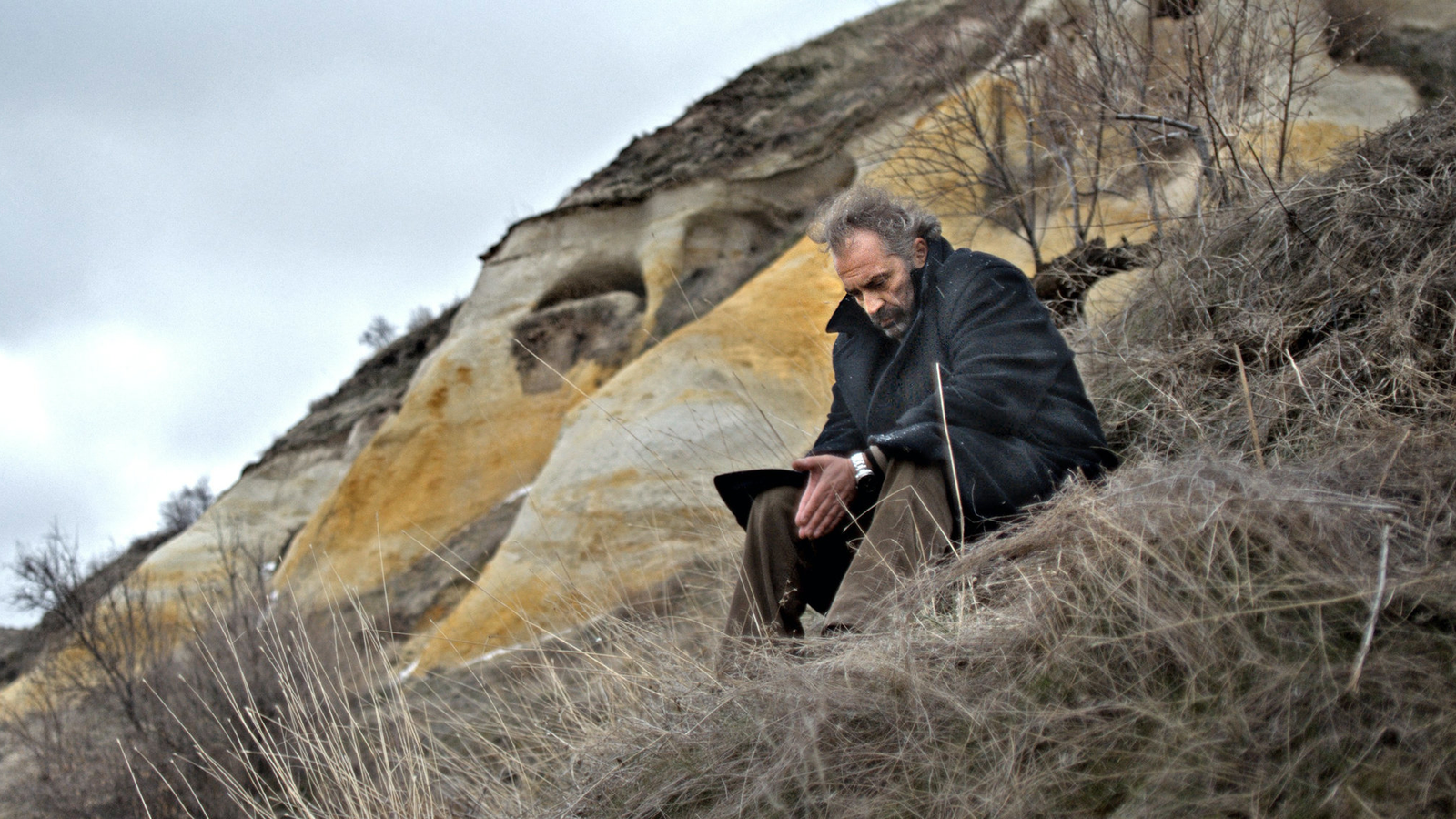
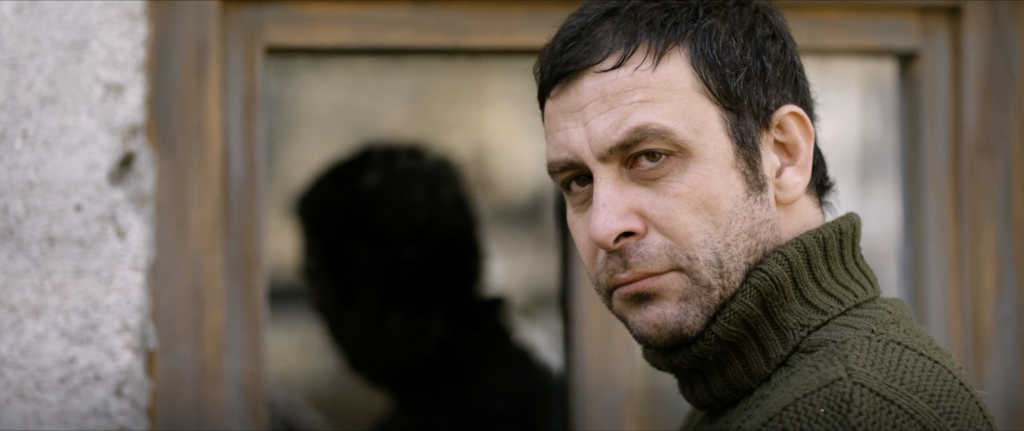
The movie begins with a hotel owner and retired actor, Aydın, looking outdoors through his window in rural Turkey. From that moment on, Schubert’s Piano Sonata in A major follows us throughout the film’s 196-minute runtime. In the next scene, one of the main problems Aydın faces occurs when a little boy throws a rock at his truck. Hidayet, Aydın’s servant, finds the boy, named İlyas, wet in the mud while trying to run away. They drive to the boy’s house, where Aydın’s tenants live. İsmail, the boy’s father, seems somewhat calm upon hearing what happened, but he slaps his son. When Hidayet turns to go back to the car under Aydın’s command, who stands far from “lower class” İsmail both metaphorically and physically, we hear the sound of a window breaking. The father smiles and asks, “Is this what you want? Are you relieved now? Do you want me to slap him one more time? Will you be relieved then?” And we learn the truth of the matter with the arrival of Imam Hamdi, İsmail’s brother.
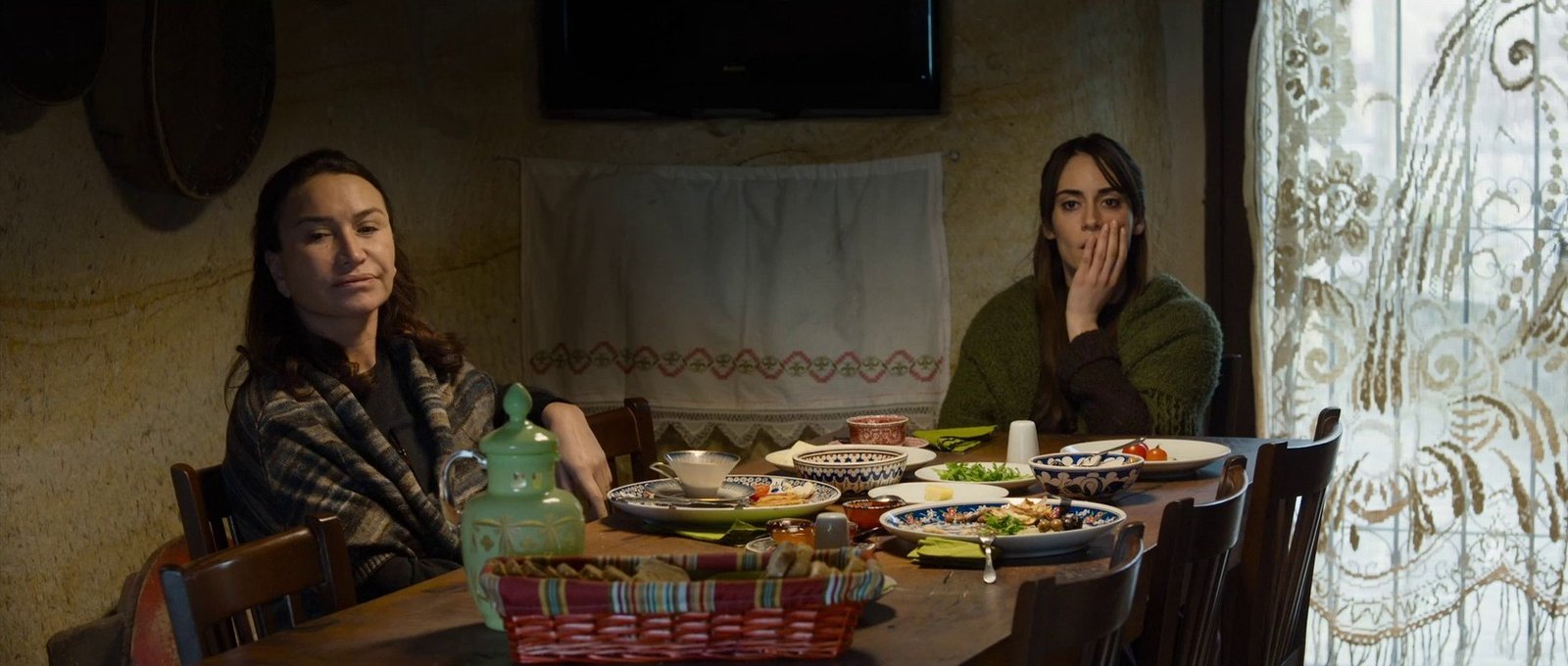
From my standpoint, male characters aside, Nuri Bilge Ceylan has created female characters—namely, Aydın’s sister, Necla, and his young wife, Nihal—with a great deal of deep structure. The rationale behind this diligence is probably that these two characters create the philosophical nature of arguing that I mentioned at the beginning along the storyline. Our first look at Necla occurs in Aydın’s room when she comes to sit behind her brother. I would say Aydın’s partial egocentric character reveals itself when he says to Necla, “If it weren’t for you, there wouldn’t be a single person left to look after me.” In reality, as we clearly see in the rest of the movie, he does not have such a strong bond with his sister, parallel to his relationships with others.
On the other hand, Nihal shows up when Aydın and his friend Suavi, two elegant “Mars” figures, are negotiating. Her husband reads a letter from a poor young woman from the village of Garip, pleading for a small building for the women in the village. However, Nihal ignores his suggestions toward helping those women. His answer at that moment of the film, “But you are a philanthropist,” reveals that both Venus and Mars will have a lot to say to one another.
Assuming the next part of this article will be for those who have watched the movie, enjoy reading the continuation!
Although there are many artworks and detailed nature sights that express the characters’ internal emotions, my favorite element is the white horse Aydın buys due to a young hotel guest’s inquiry. Differing from stereotypical depictions of horses, this horse, when it first comes out of the water, is startled and falls down exhausted; Aydın always visits it after dawn in the dark. When he decides to free the horse after the hotel guest checks out, the animal runs away as if it possessed the consciousness of being temporarily enslaved—like the ideas we plant in our minds to please someone temporarily… like what Aydın did to feel like he was doing something… to be active… to feel like he was living.
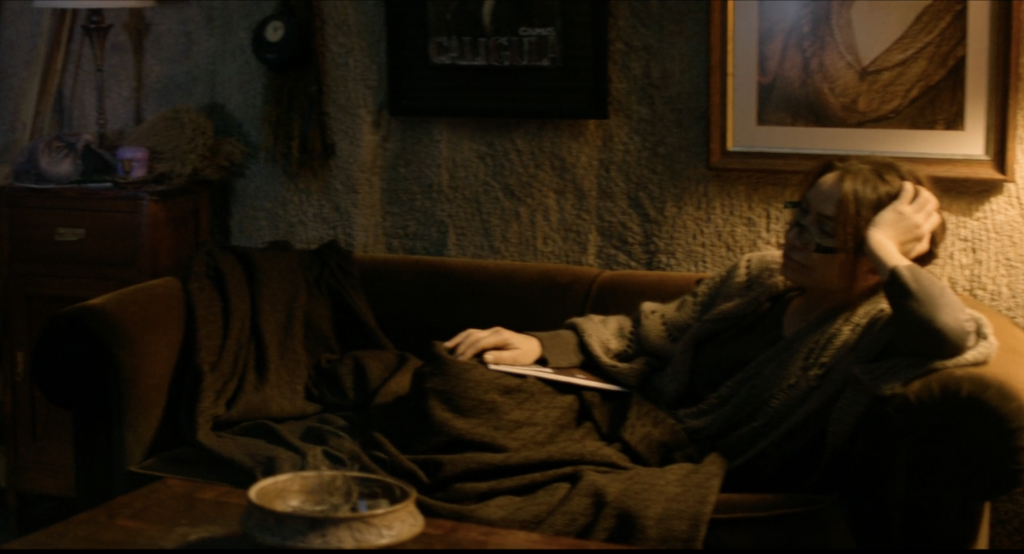
Another extremely special detail, which many people do not pay attention to, is that Necla disappears after her final uprising against everyone. Aydın specifically asks for her a few times, and when leaving for Istanbul, he tries to say goodbye to her. However, the Caligula poster by Albert Camus in his room, which hung above the couch Necla used to lie down on, partially mirrors Aydın’s fate. Caligula, by the way, is about a man who dances with death after his sister dies… That clearly displays Aydın’s losses while trying to attain something else—a closer relationship with Nihal…
To be honest, despite the way the audience perceives Aydın as an intellectual arrogant in every situation, I did not get that vibe neither while watching the movie, nor after finishing it and reviewing his actions again and again. What I find overlooked is the fact that Aydın’s manners with Imam Hamdi, his angry sister Necla’s opposing ideas, and even his responses to Nihal’s limited experience in managing a charity were thoughtful and respectful. He was not trying to hurt anyone, nor was he opposing good just to be bad. But as we always say, human beings are complex creatures. As Abbas Kiarostami once said, “being alone is the most beneficial thing for them, considering that it fosters a decent spirit on its own”.Coming together, though, is a disaster. It always makes the truth disappear because everyone has their own “good” truth, and not only do good and bad collide, but even “good and good” tend to clash.
The first climax of the movie—the part where Aydın tries to realign his relationship with Nihal through the excuse of a “charity system validation”—is an example of this collision. In reality, Nihal merely tries to do a good deed all by herself, and Aydın wants the charity to be safe and out of harm’s way. However, their perspectives of one another do not reflect who they truly are. I reckon the reason behind this humanitarian enigma is that while we argue, there is always something unrelated being added to the conversation. These pieces, torn from the secluded corners of the mind near the end of their talk, lead Aydın to say:
“To not see the other person as they are, to deify them, and then to get angry at them as if such a god didn’t exist… Don’t you think you’re being unfair to me?”
This exactly shows that Aydın sensitively understands how absurd and inappropriate it is to disagree with one another, yet he cannot express his truth.
As all can predict, the second climax is the elegant conversation between a drunk Aydın and Levent, Nihal’s friend of whom Aydın is highly suspicious. Their situation, with the calm catalyst Suavi present this time, unfolds like the quote by Shah Ismail Khatai:
“There is a word that cuts off the head,
There is a word that cuts off the war.”
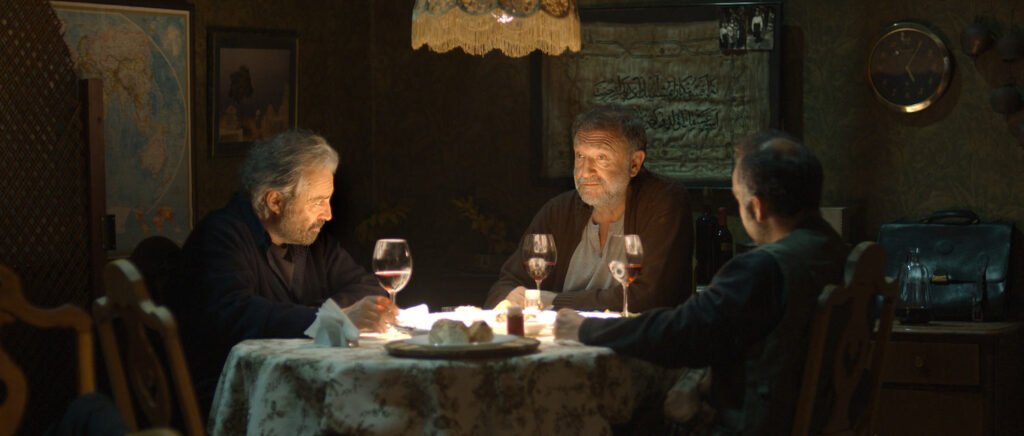
Levent simply says, “There might be some people who ask why Aydın didn’t let the earthquake victims stay at his hotel,” and this causes the real earthquake. It is an earthquake adorned firstly by Shakespeare’s line:
“Conscience is but a word that cowards use,
Devised at first to keep the strong in awe”
And Voltaire’s quote:
“Every morning I form a plan of my life for the whole day, yet I do a thousand foolish things before nightfall.”
For shedding light on this seemingly obvious yet profoundly mysterious existential reality—the question of “why the truth will never be revealed between two people”—we all have to be grateful to witness the genius of Nuri Bilge Ceylan.
For Nuri Bilge Ceylan, who has always loved his lonely and beautiful country…
—Furqan
Leave a Reply