What does one interpret by “straightforward”? It may be the rudimental surface in the seek of truth with an unknown ending. It could also be the wise station of comprehension that one can’t achieve to find the exact truth—much like Kurt Gödel did by proving that the biggest thing a mind can achieve could sometimes be proving where it can’t reach. Perhaps presenting something as straightforward as “1 + 1 = 2” is the best way to make people see cause-and-effect relationships… no filter and no afterwards realization of disappointments… Sometimes we need such friends too, don’t we?
Today, I’m going to talk about the favorite storyteller of many, who has shockingly come as a flood in the middle of a desert and still appears as the strongest source of modern-era storytelling. Ladies and Gentlemen, here is Anton Pavlovich Chekhov’s story, influence, and so on…
You see, I can’t be straightforward at all, while it has almost been 150 years since he was…
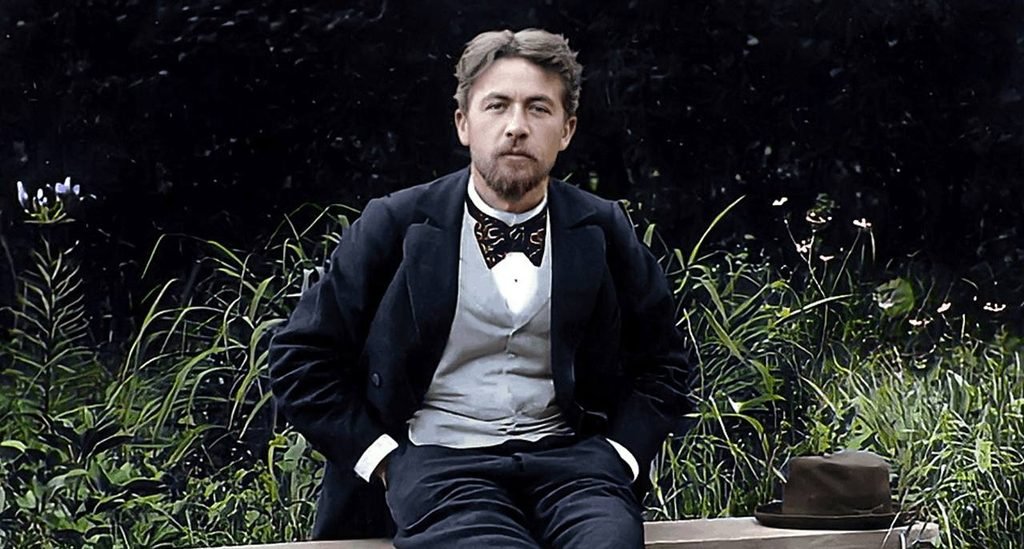
To get started, I would like to dedicate this first paragraph to defining “a flood in the middle of a desert.” So, one of the most outstanding nuances of his career shows itself from the very first moment: the period when Chekhov started writing generally coincided with unpropitious years in Russian literature. To be exact, the devastation of their literature was an outcome that grew from the loss of their huge writers like Dostoevsky and Turgenev due to an edict from beyond, alongside the socio-political troubles of the period. As expected, the dimensions caused by his era probably also showed and sometimes concealed themselves in his writing style—so much so that we now feel all these distinct moods while reading his works, much like my writing is currently being apparently or clandestinely affected by my own period right now…
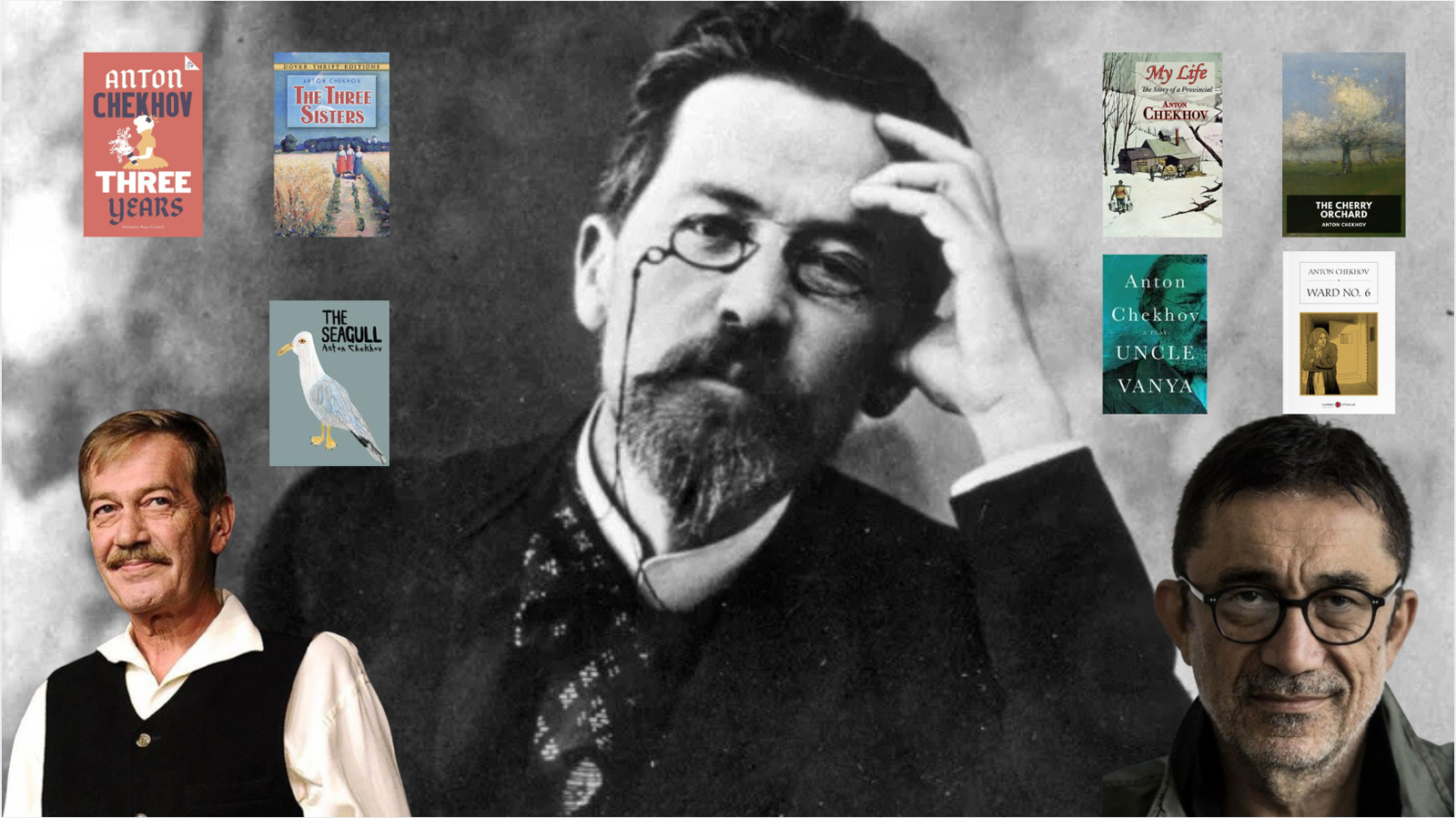
My journey with this guy started when I decided to buy Uncle Vanya after being exposed to the play in SAT Verbal questions—a bit too straightforward to be in those questions, though—over and over again. Whatever the case, I read it, and its style (sorry guys, but I’m not gonna say the cliché “it wasn’t like anything else” thing) reminded me of some of Gabriel García Márquez’s short stories I once read, which I at the time I called an “experience for pleasure” because of their niche storytelling style. Then, I read Three Sisters and The Cherry Orchard, while The Seagull turned out to be my favorite. I don’t know—maybe I loved it so much because of its more traditional style compared to the others… let’s hope not! 🙂 Also, Ward No. 6, My Life, and finally Three Years from his novellas… You can guess who adored them all.
Okay, after reading them all, I had another complete mission: the best way of embracing a classic by looking for its post-modern (you see what a lovely combination of letters that is! :)) reflections… And it was almost the easiest game of “hide and seek” I’ve ever been involved in, because Chekhov’s signature was everywhere. He was every storyteller’s medium for expressing the wish to go, the hope to go, and the assumption that happiness lies somewhere else… And guess what? My favorite storytellers—both Turkish: Ferhan Şensoy (a Turkish Comedy Actor, Playwright, and Director) and Nuri Bilge Ceylan (The Best Arthouse Director of the 21st Century?!)—presented me with the best dedicated adaptations I’ve ever seen. Chekhov was the absolute interconnection of these two prominent artists’ opposite natures in appearance… Now, let me present what these “adaptations” are.
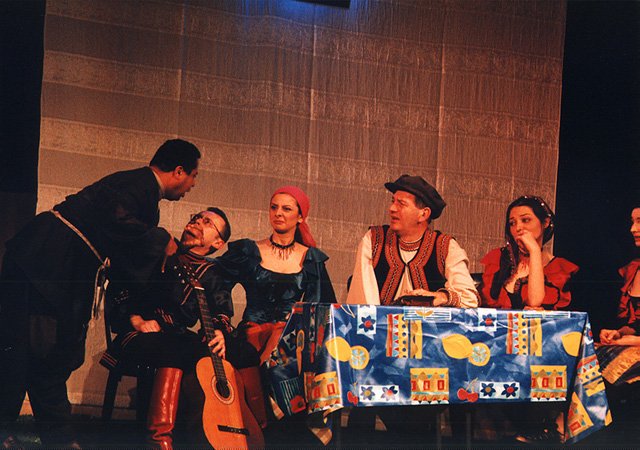
Fişne Pahçesu by Ferhan Şensoy is an adaptation of The Cherry Orchard… Actually, in this adapted play, Ferhan Şensoy clears up the first question that bumped into my—and probably many others’—minds right after finishing the book: “How can such a depiction of longing be a comedy?” He does this delicately with his genius. He turns Chekhov’s Russia into the northern region of Türkiye: Karadeniz (the Black Sea region)… With every cultural detail and dialogue, Ferhan Şensoy puts on a splendorous performance, helping the Turkish audience emphasize and feel Chekhov’s style of expression. I reckon it wouldn’t be a surprise that Fişne Pahçesu is my all-time favorite adaptation too…
Parallely, as for Nuri Bilge Ceylan, his whole creative process so far has been based on a Chekhovian mentality. To be clear, at the end of his first masterpiece Mayıs Sıkıntısı (1999) / Clouds of May, a small sentence flows: “Dedicated to A. Chekhov.” That inspiration never ends, as we can see in all of his films where the odysseys of characters like ourselves are told just as in Chekhov’s stories… With the mortal questions and decisions regarding who is wrong and who is right…
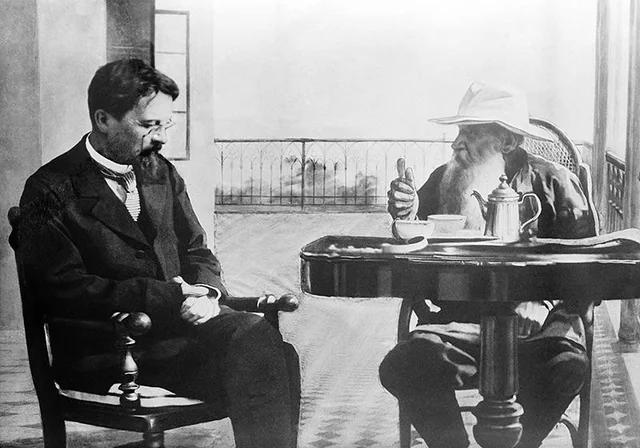
Finally, I would like to end the article with a guy called Leo Tolstoy’s—(a better thinker than all of us, by the way)—thoughts about our protagonist:
“Chekhov, as an artist, cannot even be compared to previous Russian writers—Turgenev, Dostoevsky, or myself. Chekhov has his own style, like the Impressionists. If you look closely, you see him applying whatever paint he gets his hands on haphazardly, without making any choices. There seems to be no connection between these paints. But if you step back and look, you’ll be surprised. What you see before you is a brilliant, captivating painting.”
To every simple mind that is somewhere between basic and complicated…
Sincerely yours,
— Furqan

Leave a Reply