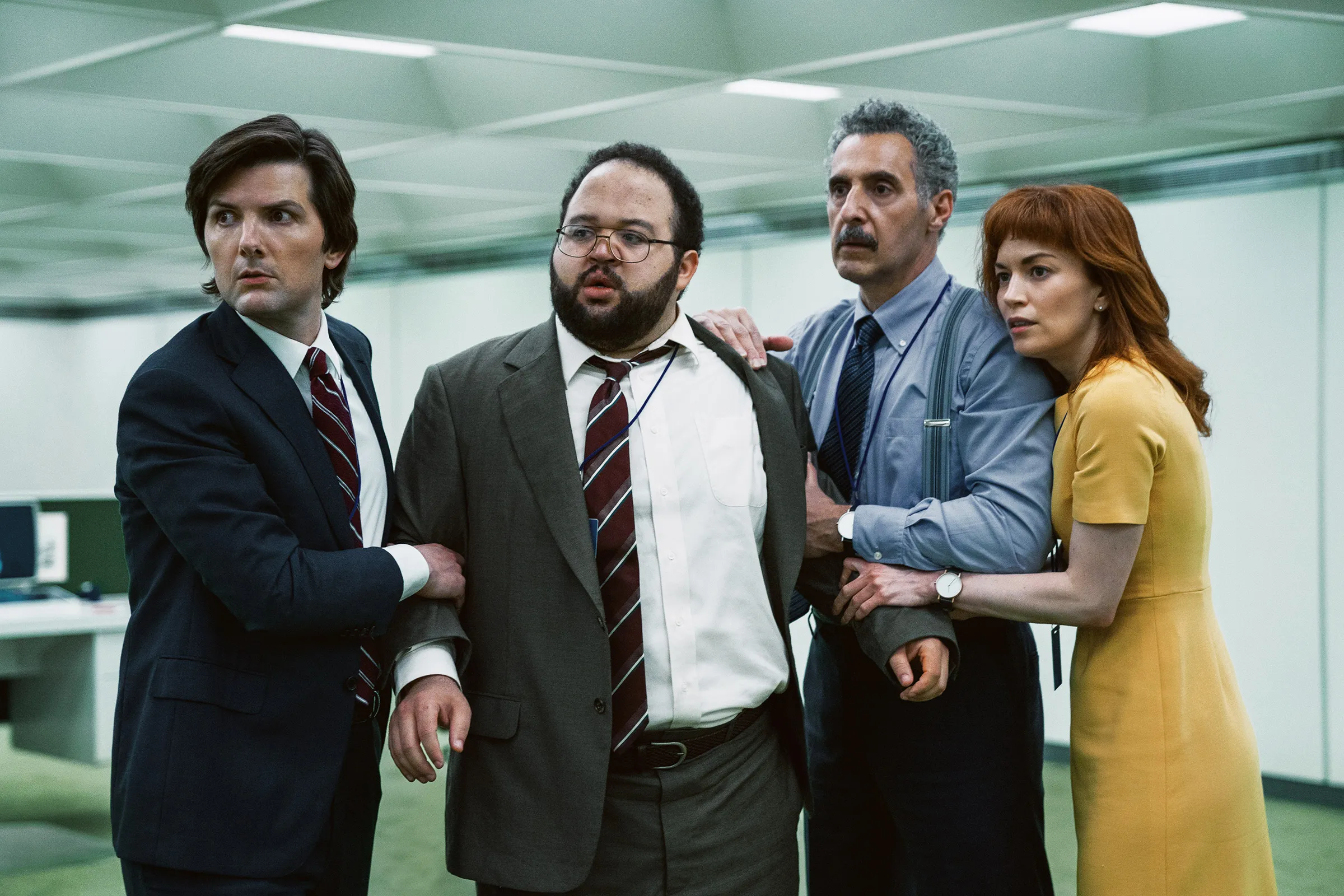
The ethics of society… They always push against the individual’s morality, obliging one to be a part of the collective without excuse. They are the same ethics that have allowed wars, genocides, and feuds to be permitted so easily. Yes, it is impossible to prevent the authority that the “ethics of society” carries. It remains unattainable until there is only one individual left, which is too sarcastic a prospect to ever be real. Today, we are going to take a close look at a TV show that consists entirely of ethical questions born out of the environments societies would experience—or should I say, already experience?.. As I also asked my cringe first paragraph question, ladies and gentlemen, here is the most ethically provocative series of the 21st century: Severance.
The first scene of the series starts with the “investigation” of a woman named Helly R. and the arrival of her “investigator” in a plain conference room. We then learn that this is simply the normal onboarding procedure for Lumon—a company that has made the complete severance of work and private life possible over the years. As the episodes pass, we wait excitedly for the eventual salvation of the characters in this dystopia, which is how we usually process the narrative tropes of nearly all dystopian works. Severance walks a thin line between horrifying, stark drama and absolute farce so deliberately—both within its fiction and reflectively in real life—that I feel obliged to praise it highly and recommend that you, the readers, watch it right away.
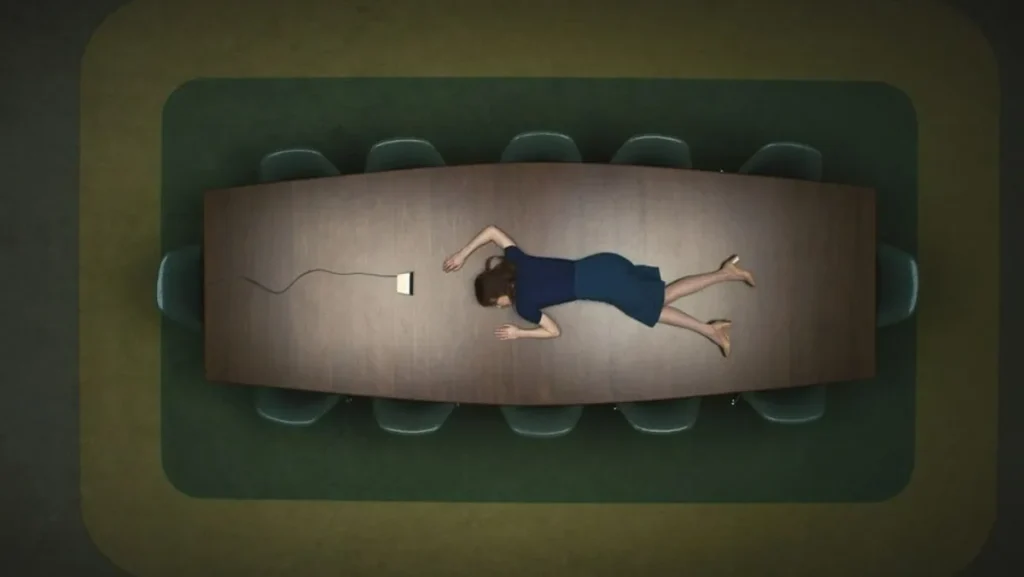
Assuming the next part of this article is for those who have already watched the show, enjoy reading on!
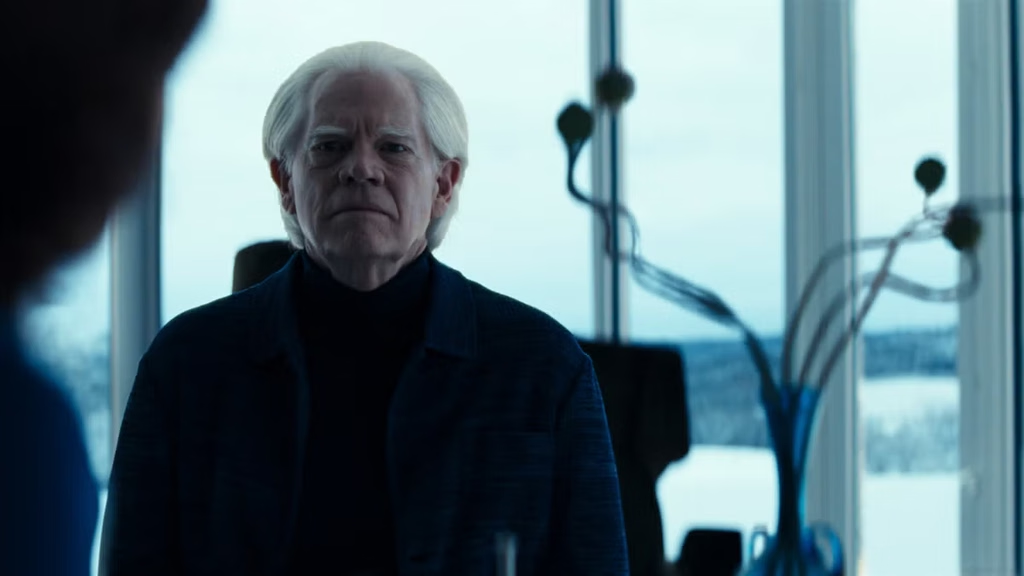
Right now, as we know, there is roughly a year to wait for the third season of Severance. Truthfully, the first two seasons have explored different tones, even if it does not always feel that way—a fact I attribute to the brilliance of a storyline carefully analyzed by professionals before being approved. The rationale behind my belief that the show tremblingly presents “different tones” throughout its script is that it affects the audience at distinct levels in each episode, as calculated by its creators. Specifically, stark contrast between the first and second season finales is a prime example of these shades. The enigmatic audience questions left by the Season 2 finale—such as why the 150-year-old Lumon was so hyper-focused on one person (Mark’s wife, Gemma) that even the current boss of the entire company was personally watching her progress, or what Burt’s true background with Lumon is—were on a completely different level of perplexity compared to the end of Season 1. From my standpoint, although there is no single aesthetic stereotype, the creators have calculatedly designed every episode as intended, and I reckon its vital importance will one day become fully apparent, especially considering how rapidly the modern television landscape is fading.
To praise Severance fittingly, the work of the actors cannot be ignored. Indeed, all the cast members act with supreme professionalism, but Adam Scott’s performance as Mark stands apart. Scott performs a subtle change in his facial expressions when transitioning between his “innie” and “outie” selves. He truly changes his facial codes, all the time manages that shift, and I personally rank his performance as one of the best in a television series in the 21st century. Perhaps I am flattering him too much in my mind, but his acting seemed perfect in every single frame to me. That is why I want to express my utmost respect for him, alongside my wishes for a bright career in the coming years.
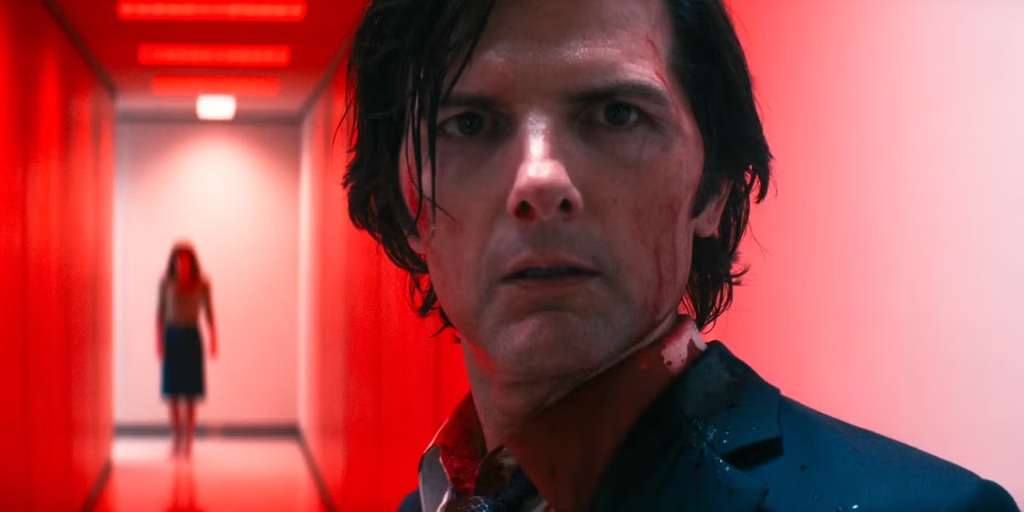
Now, let us focus on the most vivid and problematic ethical concept presented in Severance, an idea that becomes exponentially more intense with each passing episode. The ethical concept I am referring to is “antinatalism”—the philosophical view that procreation is morally wrong and that bringing new sentient life into existence is inherently unethical. The process of severance effectively gives life to a new person, much like normal human reproduction does. However, the life granted to these “innies” consists solely of performing work they know nothing about for eight hours, only to return to doing it the moment they “leave.” In this light, of course, we can barely call it a gesture to antinatalism; However, in Season 2, Episode 9, as innie Mark and outie Mark communicate their separate points of view via camera, it reminds us of the inevitable clashes between children and parents later in life. If severance reflects the idea of bringing another life into the world, it serves as one of the show’s core systemic critiques. To my mind, the series implies that while the system on one hand might leverage antinatalist ideas—to prevent overpopulation or manage resources—on the other hand, it clandestinely and unethically creates an entirely new class of subjugated life, which is kind of opposite to antinatalism they praise.
Lastly, I want to underscore how my expectations evolved while watching the show. One of my initial hopes was that Lumon would reveal a vast, organic architecture—something with a mind-blowing, penetrating nature akin to Tarkovsky’s Solaris. As you may remember, the very first scene of the first episode featured a speaker resembling an umbilical cord, making it natural for the audience to view Lumon as a living organism or a vast brain composed of millions of cells. We have not seen the full extent of that grand structure yet, though we likely will for the sake of the narrative reaching its masterpiece potential. Another expectation of mine, also related to this sense of scale, concerned the enigmatic, mysterious leadership structure of the company. However, near the end of the first season, we encounter Jame Eagan in a surprisingly grounded manner, which temporarily deflated the tension one might feel.
At least, that was the impression I had before watching the YouTube video by Barış Özcan about Severance. To be clear, the way Mr. Özcan connected Lumon to real-world company Apple— which finances the show—was illuminating. The uncanny similarities in corporate architecture, promises, and ideological commitments between these real and fictional entities even inspired the title of this article: The Biggest Self-Satire of the 21st Century Through a TV Show. I would like to express my gratitude to Mr. Özcan for that insight. Some of you may ask why a corporate entity would greenlight a show that directly parodies its own existing culture and systems. That is a completely understandable question, and I do not claim to have a definitive answer. However, allow me to describe a real-life scene that parallels our dilemma:
The year is 2003. The setting is the United Nations Security Council. Colin Powell—the United States Secretary of State—presents the justification for the Iraq War. Behind him hangs a large blue curtain, matching the signature shade seen throughout Severance. And concealed directly beneath that curtain, Picasso’s Guernica (1937) was kept from witnessing the symbolic destruction of its ultimate message.

Sincerely yours,
—Furqan


Leave a Reply