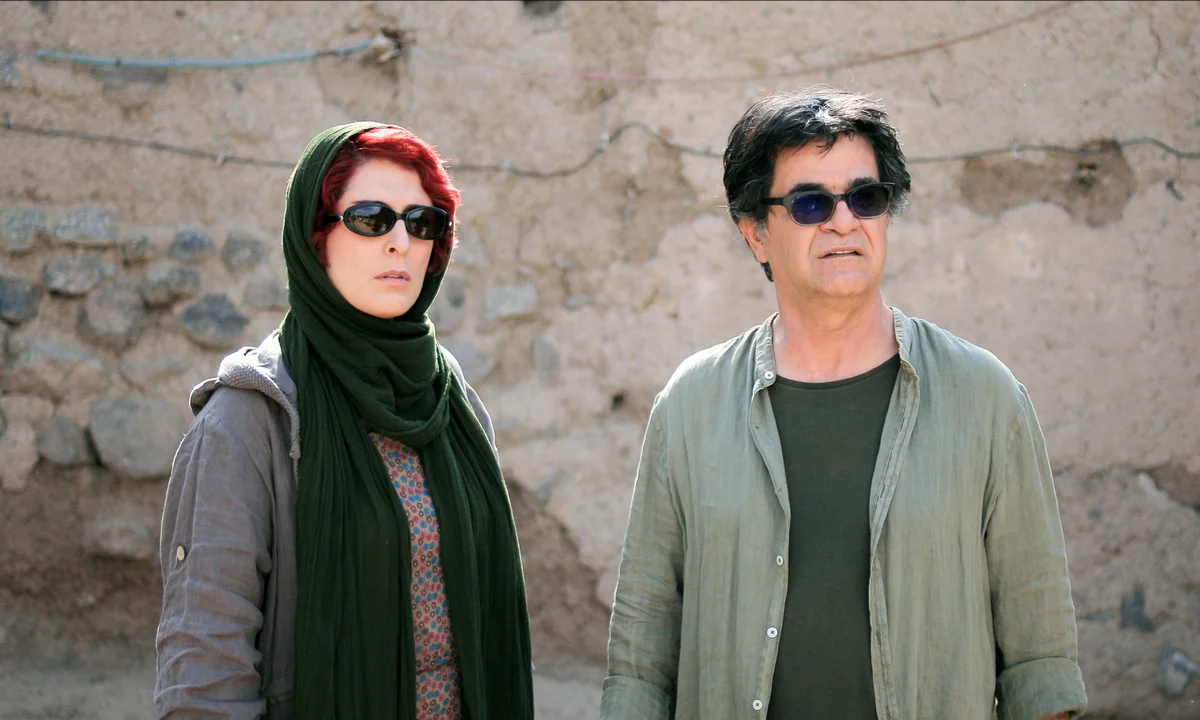
Salvation… Perhaps the salvation of a spirit can only come true in freedom. Because the ethics of almost every society diverge from the pure morality of an individual, you must ultimately rid yourself of any tangible or instinctive restrictions! If you view this idea as a wish for disaster, you might be right; it can cause a great deal of turmoil unless you choose to pursue that path through art. The thing is, the only “tool” that becomes its own savior when it is banned is Art!
I mean, if weapons are banned, they theoretically cannot be legally present. Art, however, is capable of rebelling against its own ban. After being sentenced to a 20-year filmmaking ban by the Iranian government in 2010, Jafar Panahi made This Is Not a Film in 2011. Then in 2015, with absolute genius, he made Taxi. In both films, he chose a directorial approach that outsmarted those who banned him in the most artistic way possible. In 2018, his tendency to make films in spite of his ban gave us Three Faces—a movie that carves a path directly to the profound wounds of his roots.
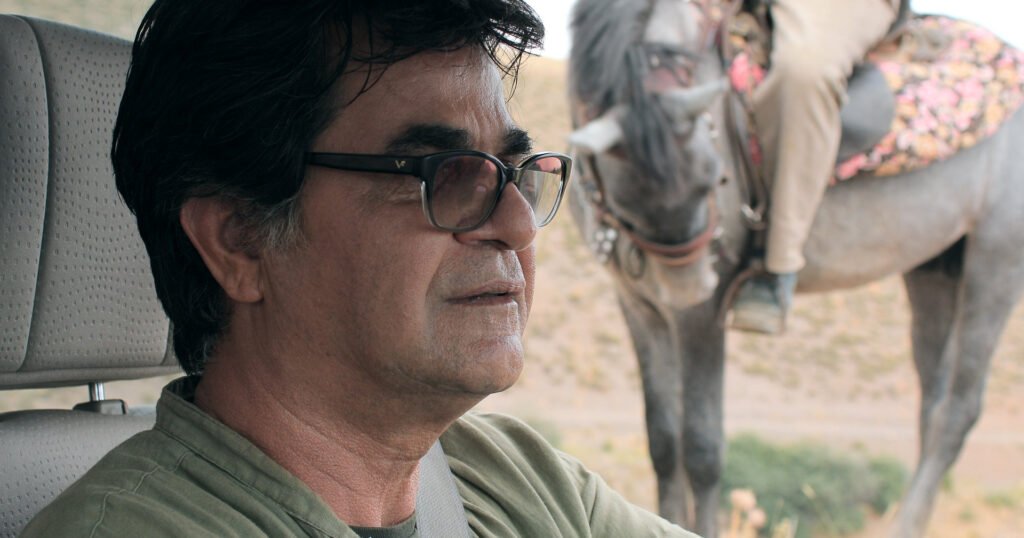
The film starts with a video message of a young girl named Marziyeh who wanted to attend conservatory, but did not due to forbid of her family. Message is directly to Behnaz Jafari— renowned Iranian actress— who has not answered girl’s calls and messages so far, as she claims. Video ends when Marziyeh makes a suicide by hanging… And next scenes is Behnaz Jafari’s frightened face in the car that Jafar Panahi drives.
My Thoughts on the Film
Well, my dear reader, let me be honest and share a secret with you. As a massive fan of Iranian cinema, while watching this film, I was fairly certain that—no matter how good it was—I wanted to take a break from writing articles on Iranian cinema. However, believe it or not, its distinctive style was so captivating that I simply could not ignore or skip it. Today, I am going to list several focal points that are highly vital to me! Let’s take a look at them.
1. Interlocking the Audience Fully on Flow
First of all, as I mentioned in my article on Taxi, Panahi’s use of a fictional semi-documentary style—much like his mentor, Abbas Kiarostami—is truly captivating. Even though we can tell from the very beginning that the movie is fictional, Panahi consciously includes a scene where Behnaz Jafari says with genuine concern:
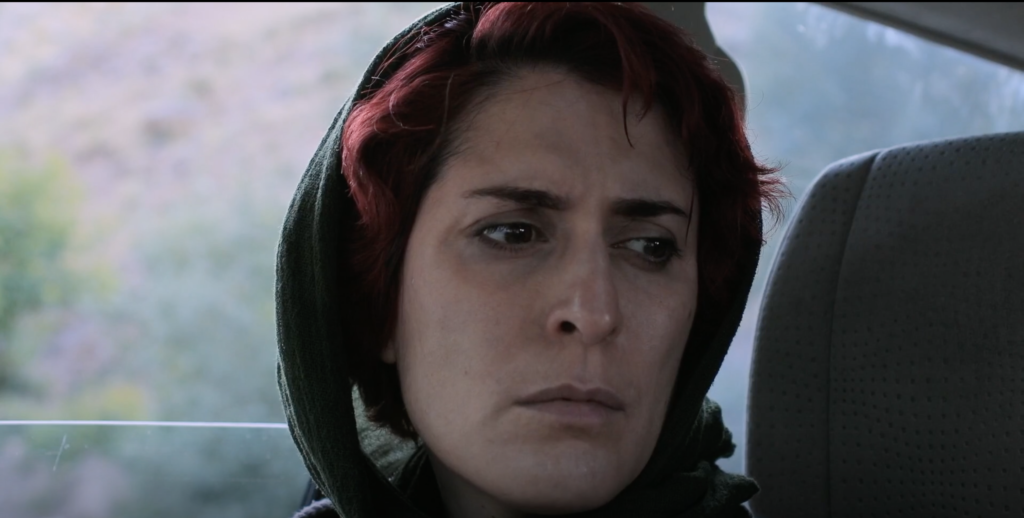
“Mr. Jafar, you recently said you had a screenplay idea regarding self-suicide, if it is something like that…”
This deliberate tactic once again pulls the audience deeper into the screen. What a genius!
2. The Stranger in Town
Secondly, the tale in Three Faces leans heavily on one of the most popular literary theories:
“All great literature is one of two stories: a man goes on a journey, or a stranger comes to town.”
Their story strongly embodies both. We know they are going on a journey. However, what only a few specific viewers might truly understand is Panahi’s self-depiction as a stranger in the very place they visit. Let me explain why: Jafar Panahi was born in Mianeh to a working-class Iranian-Azerbaijani family. While he spoke Azerbaijani at home, he spoke Persian to others. Altough he struggled politically with Iran throughout all his life, he never left there.
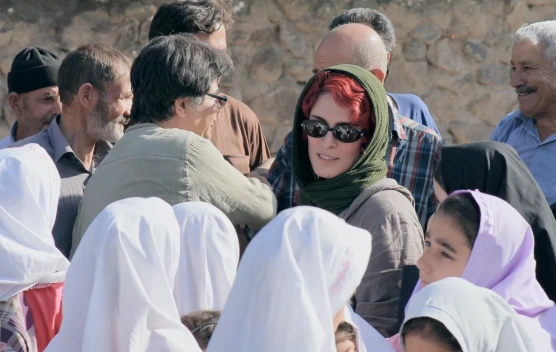
In the film, the town they visit to find the girl is located in an Azerbaijani-populated region. The locals speak their own language, yet Jafar Panahi insists on saying, “I don’t speak Azerbaijani very well; can you please speak in Persian?” This detail is also apparent in Hit the Road, the debut film of Jafar’s son, Panah Panahi. Perhaps the underlying message is: “We are beginning to lose our mother tongue.”
The Meaning Behind the “Three Faces”
The title Three Faces becomes clear after we learn that Marziyeh made the video professionally just to meet Miss Behnaz. We learn that she stayed for three days with Shahrzad—a famous, pre-revolutionary actress who was forced into isolation. As the hours pass, three women, three artists, and “three faces” stay in the same small house all night. The house is tiny, symbolizing how they are restricted to a very limited amount of freedom.
The next morning, Jafar Panahi drives Marziyeh home. Her angry brother, furious upon seeing her, waits outside holding a stone. Meanwhile, Panahi observes Shahrzad drawing nature, as if she has escaped restrictions through her own creativity. In the following scene, as they head back to Tehran with a broken car window, Behnaz Jafari steps out of the car to walk. The Azerbaijani folk song “Sari Gelin” plays in the background, and Marziyeh walks after Behnaz—an unexpected turn of events.
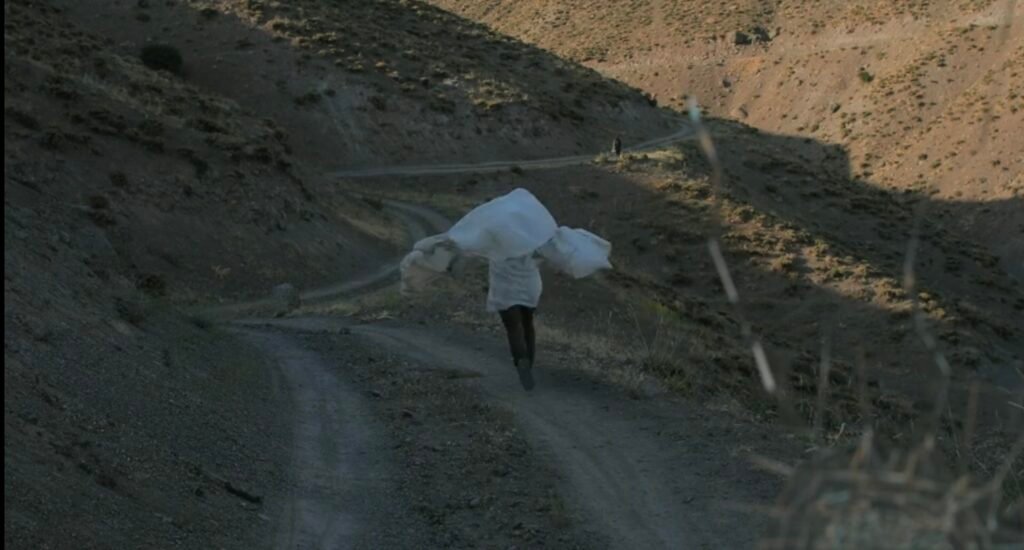
This signifies that there is still hope for future generations—the true faces of Iran. There always has been, and there always will be, despite the opposing faces they face.
From Azerbaijan with love to its son, Aziz Jafar Jan… Khodahafez!
—Furqan

Leave a Reply