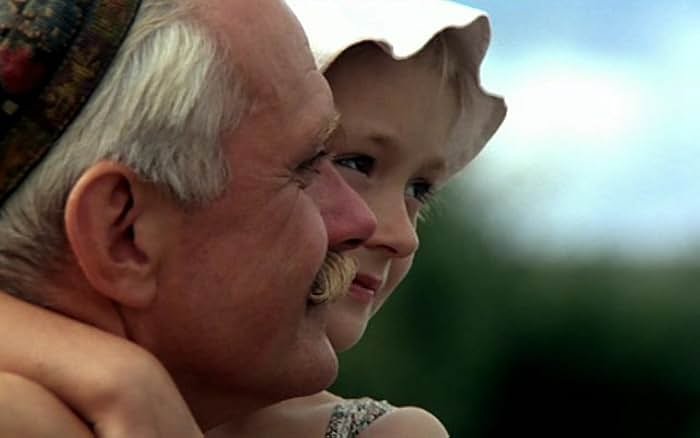
“Idolizing a politician is like believing the stripper really likes you”… While being anonymously posted and going viral on the internet, I assume this unvarnished but starkly genuine quote will definitely be on the tongues of some open-minded future generations, even though they might not encounter it in history books. Today, I am going to dedicate this article to a film that both showcased the validity of that “internet quote” and made it possible for the first and last time for a screenwriter from my country to win both an Academy Award and a Grand Prix: Ladies and gentlemen, here is Burnt by the Sun by Nikita Mikhalkov.
Firstly, I would like to sum up my efforts to underline the success of the film. Burnt by the Sun is co-written by director Nikita Mikhalkov and Rustam Ibrahimbekov, a renowned Azerbaijani screenwriter famous for his work on Istintaq(1979), Ad Gunu (1977), Park (1984), Urga (1991), and Burnt by the Sun (1994). His lifetime success still remains the greatest in Azerbaijani cinema, as no one else has ever won an Oscar or a Cannes award like him. Reckoning I have partially expressed my admiration for Mr. Rustam, let’s dive into the movie.
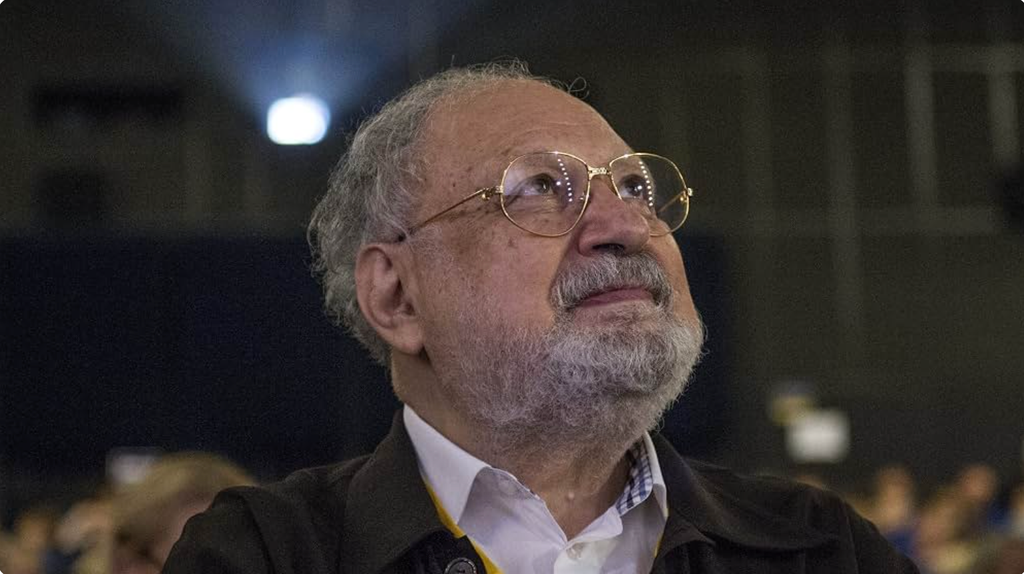
Rustam Ibrahimbekov (1939-2022)
The film starts with the happily lingering frames of revolutionary hero Colonel Sergey Kotov, who spends an idyllic summer with his family—his young wife Marusya, his six-year-old daughter Nadya, and other assorted family members and friends. After a while, the unheralded arrival of Cousin Dmitri from Moscow occurs in a charming synthesis, and the film goes on to change everything 180 degrees, where we, the audience, are frustrated so perfectly by a spectrum of hate that two different personas make us feel at different parts of the film.
Assuming the next part of this article will be for those who have watched the movie, enjoy reading on!
It might sound a bit absurd, but one scene of this entirely niche film reminded me of a recently made mainstream movie—Spider-Man: Brand New Day (no kidding, please). As a weirdly self-proclaimed fan of that mainstream superhero movie, my favorite scene was immediately the one where Peter Parker was taking MJ back home so sadly that we could see the grief in his face and eyes despite the mask on his face.
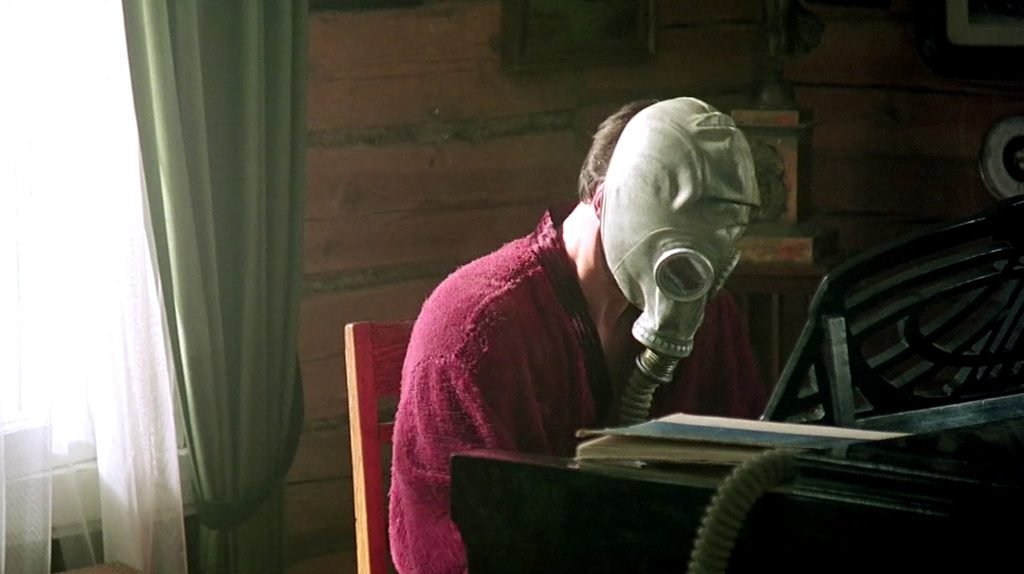
And guess what? Once again, my favorite scene in Burnt by the Sun featured grief “hiding” under a mask, too. I mean in the scene where everybody comes back to house after soldiers kick out them from lakeshore and Dmitri changes the melody from Franz Liszt’s Liebestraum No. 3 to Jacques Offenbach’s Can-Can while staring at Kotov so intentionally. Exactly at that scene, we start to accept that each of Dmitri’s actions works as a special sign for Kotov—the husband of the woman he once loved—whom he tries to imply something very profound.
Brushing off that I’ve just wanted to give some space to a bit irrelevant similarity now let’s move on to what happens next. Sergey’s discomfort and Dmitri’s masterfully disguised anger come together in the living room… Dmitri starts calling Kotov’s six-year-old daughter Nadya “Nadine”—as she would be called in French. Then, holding two dolls in his hands, he narrates a story of a poor young man’s deportation from his country and his master’s beloved daughter due to a renowned colonel who later married that master’s daughter. Throughout the story, Dmitri appeals to “Nadine,” while playing Utomlennoye Solntse by Jerzy Petersburski on the guitar with Nadya right after the storytelling. Although we catch the background of the little story Dmitri tells, Marusya’s shaking hands ratify everything: the colonel who obliged that poor man was Sergey, and the poor man was Dmitri.
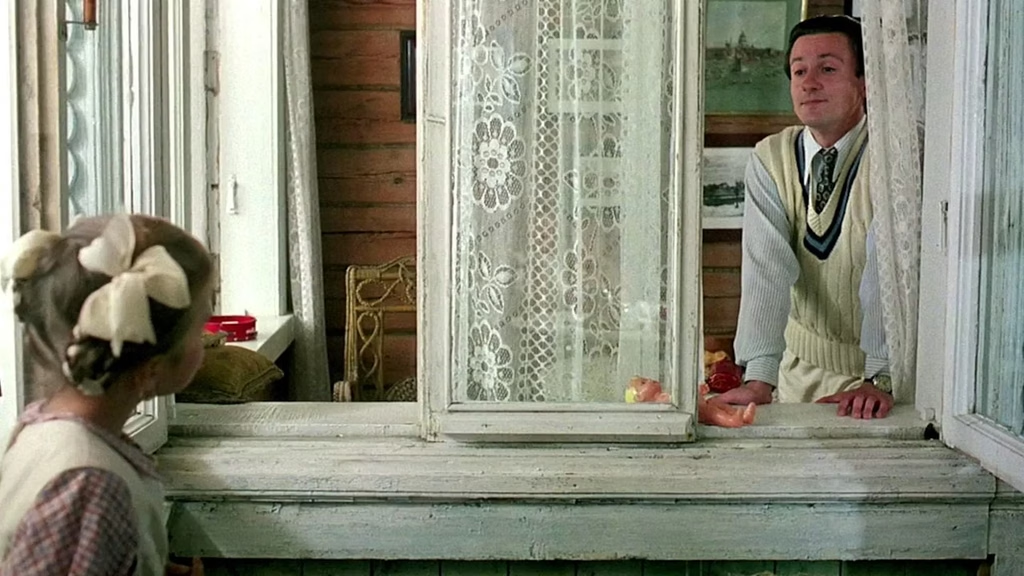
From that part on, Sergey’s yellow mustache reminds us of cruel policies and authorities rather than a sweet father of a lovely family. Sergey’s reassurances to his wife on rooftop seems even more evil. On the other hand, Dmitri’s playing with little Nadya recalls our own good deeds, since that part of the film forces us to empathize with Dmitri. However… because nothing is entirely white or black, this empathy shifts after a few scenes in the seemingly peaceful but somehow eerie environment of that Soviet Socialist Republic.
Dmitri confronts a father in front of his daughter by saying he will be executed due to treason against the homeland. We, the audience, watch it in shock, but meanwhile, the flow of the film becomes just a mass of “meanwhiles” from the perspective of a man, a father—the moment where a father will never again see his daughter, whom he had given one of the most beautiful compliments ever just a few hours earlier in a boat: “With you, everything is calm. Everything is easy.” By now feeling sympathy and pity for the colonel’s yellow mustache, which carries the burden of the impending loss of everything he has, the final straw is what Dmitri says one more time: “If you do not confess to treason against Stalin, we will remind you of your daughter and wife.” Nadine… Nadine… We now get why Dmitri was underscoring France too… He was penetrating in Sergey’s mind that you see, you deported me to France, and now I’m able to call your daughter in any way I please… Especially in French…
And finally, the time to leave arrives. Sergey spends every single second full of joy, leaving the men who have come to take him to Moscow waiting in confusion. The most haunting fact is that everything goes on so normally in this case, yet it is simultaneously brightened in every frame by little Nadya’s everyday joy—a joy that prevents Sergey from acting in any way that implies Dmitri is going to ruin his entire life. Even she leaves as normally as ever. Afterwards, the “authority” in the car hurts both a figure of the revolution and a random working-class man who has begged everyone to find his destination throughout the film. And because all these things end up in harmony in front of the formidable image of the one they all “believed,” Joseph Stalin, Burnt by the Sun wraps up the utter futility of forming a one-sided relationship with dominant authorities.
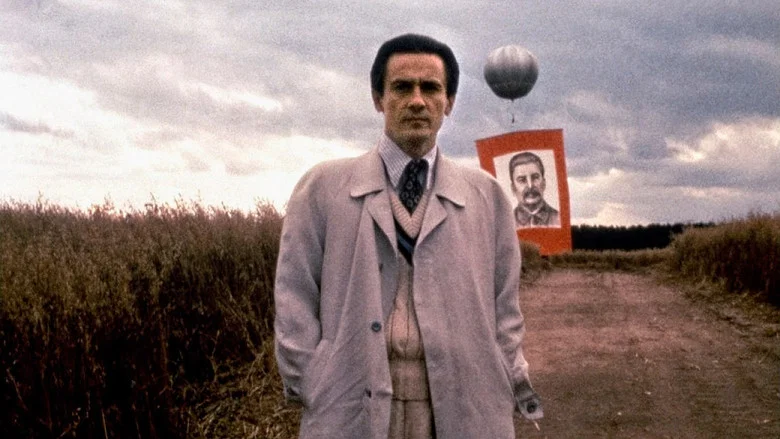
In conclusion, remaining relevant at any time, art is always the key element for the enlightenment of societies struggling under the rubble of being dominated by any means. Art is what prevents the uprising of our most basic instincts, such as committing genocide against anything we hate. Without art, fascism would be the most common lifestyle of every nation, considering that during the WWII, Joseph Goebbels—the Propaganda Minister of Nazi Germany—was practically almost only producing provocative fascist war films. With Burnt by the Sun, Nikita Mikhalkov demonstrated how personal affairs, mixed with certain catalysts, can simultaneously work and fail whenever human nature’s most abusive impulses take over. And yes, of course he did it through the power of art.
“I want to say the truth which I don’t know, but try to find.”
This is what he said in front of millions while winning the Oscar in 1994 for Best Foreign Language Film. Right now, the person I felt was worth praising has become politically very conservative and opposed to peace, and so on. However, as he once stated, we want to say the truth which we do not yet know.
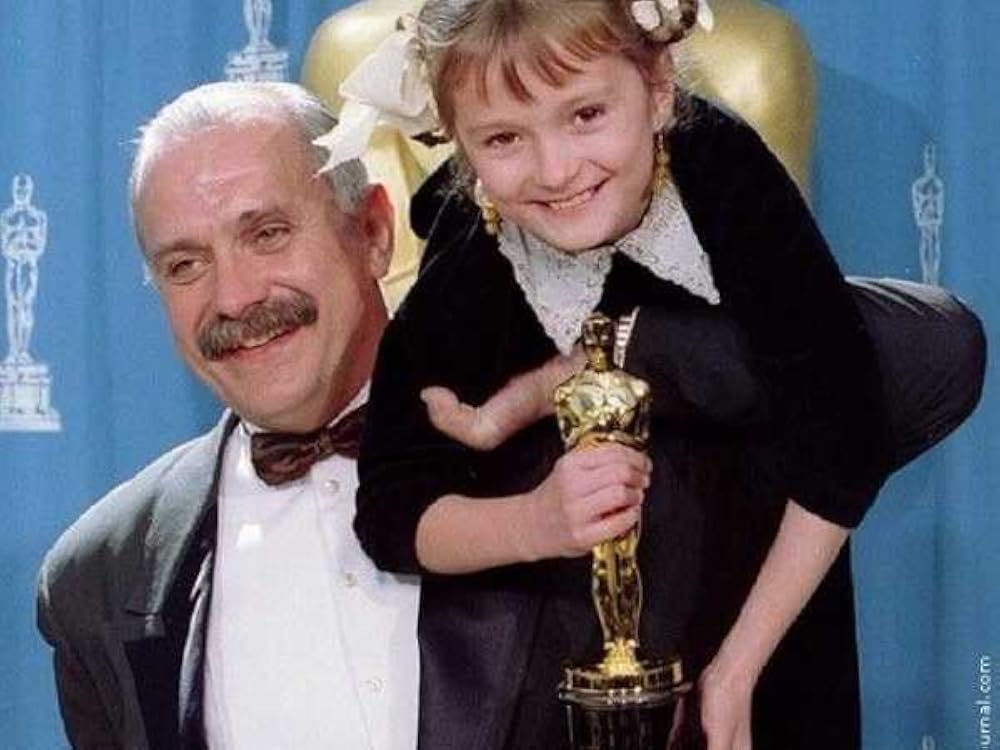
Hoping Mr. Nikita will take the side of peace and goodness in the end… in any case, thank you for such a film. To Nikita Mikhalkov and, most importantly, Rustam Ibrahimbekov, whom I wish to rest in peace…
Sincerely yours,
— Furqan

Leave a Reply