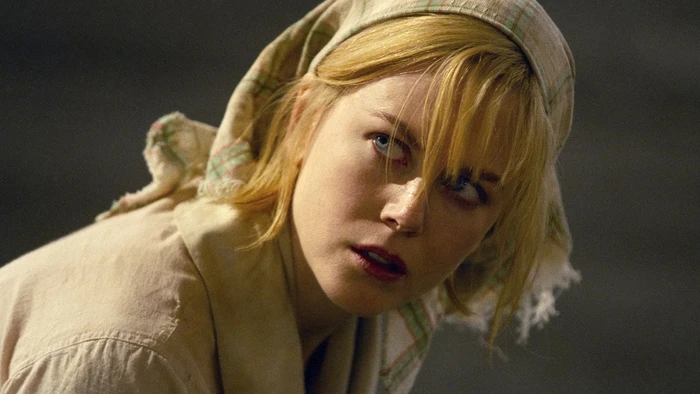
The film starts by introducing the residents of a town called Dogville. As viewers, we observe all these personas living without any walls beyond their own homes. What we see are stage-like scenes that feel like a theater production. Considering that the town’s area is quite narrow and even the surrounding sky is depicted as either entirely white or entirely black depending on the time of day, there is no given comfortable space for us. This discomfort is a deliberate choice born of Lars von Trier’s experimental genius. In the beginning, you long for a change in this stylistic choice, but it becomes one of your favorite cinematic experiences by the time the credits roll.
In the prologue, the most remarkable character in Dogville appears to be Tom Edison Jr., a young intellectual who is idealistic and acts like a person of high moral standards. When the main event of the prologue occurs—a woman named Grace runs from the mob to the town and begs for help—he convinces the community to accept her in exchange for her labor. Day by day, Grace’s presence tremendously alters the residents’ dull lives for the better. However, alterations do not stick to positivity.
Assuming the next part of this article will be for those who have already watched the movie, enjoy reading the continuation!
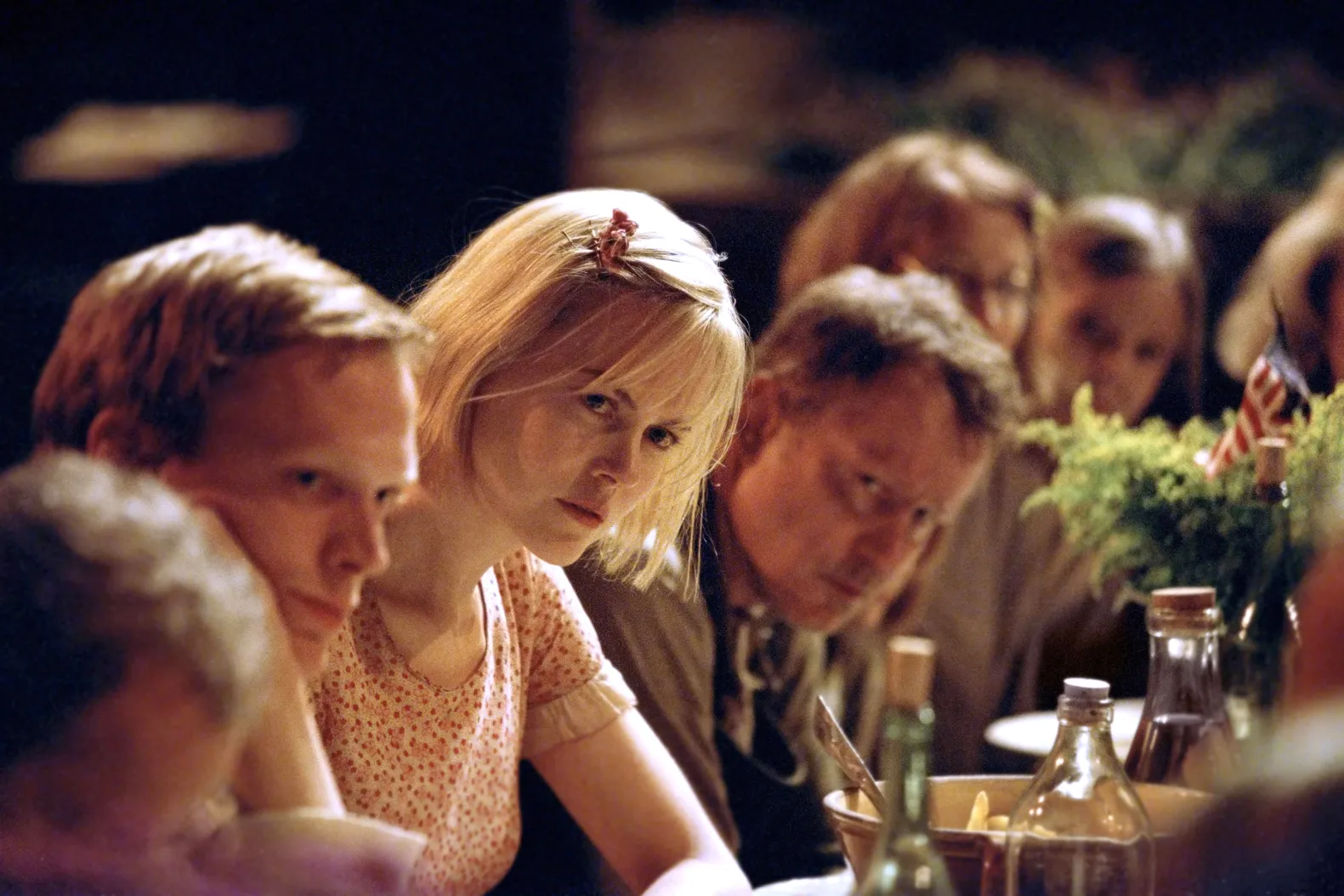
As you might predict, for a film that dives into the deepest, darkest sides of humanity, a bunch of metaphors are waiting to be brought to life. Let’s start with the most obvious one: demonstrating Grace as Jesus, her mafia father as God, and the invisible dog, Moses, as the Messiah. As you can see, the dog is not a tangible part in depiction of their lives, much like the walls and doors are not. Similarly, we have not seen the Messiah in the real world yet. You can hear Moses bark and see the scene where Grace gets bitten by him, but he doesn’t linger. He just sits in his place while people continue to mercilessly ignore what their neighbors do to Grace. In the film’s climax, letting only Moses survive is what makes this three-hour film more perfect than anything else could.
Equally obvious is the choice of Tom Edison Jr. as Judas, which actually conceals many points from the audience, whose minds have already been tortured by seeing Grace imprisoned with a collar. Even when that foolish “engineer” guy—whom Grace taught to socialize a bit and be better at his occupation—crafted a wild, inhumane collar for her, Tom was waiting in a corner, skipping out on intervening once again. Setting aside his inherent capacity for evil, and given that he kept the mafia’s phone number from the very beginning, Tom waited for something we cannot easily define. He waited for a tired, pale Grace to reach her lowest condition, yet he did not sexually abuse her like the other men did, despite his professed love for her. Before deciding what to call his dilemma, we must first understand the difference between individual morality and societal ethics. Since Tom’s smarty standards were genuinely dependent on Dogville’s society, solitariness—even if he could have risen above it—frightened him. It frightened his cowardly nature. That is why this Judas had to do what he thought would “save” himself.
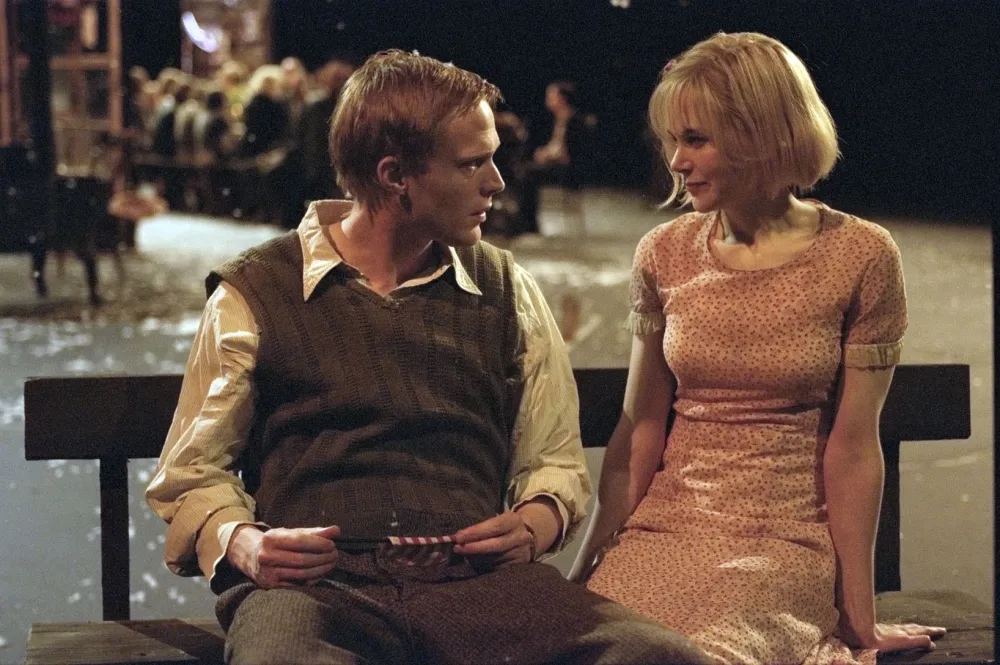
The final metaphor involves the seven trinkets in the store that no one buys, representing the seven deadly sins. From my standpoint, Trier has a specific intention regarding the fate of those seven trinkets that is really unnoticed. At first, the residents tell Grace that no one has bought them for a long time. This occurs when the townspeople have not yet revealed their true personalities to her. As time goes on, Grace buys all seven of them. However, when Vera, the wife of the man who raped Grace, comes to slander her, she breaks the trinkets—a metaphor showing that Dogville commits all possible sins against Grace. In that moment, Vera says, “I’ll stop if you can hold back your tears.” And merciful, naive Grace says the exact same thing before ordering the execution of Vera’s children in the final massacre. An eye for an eye! The most common philosophy in history.
Now, let me finish this article for those who think Dogville is just an insult to themselves and humanity… Guys, whatever you think, do not forget this quote by Friedrich Nietzsche:
“Verily, I have often laughed at the weaklings who thought themselves good because they had no claws.”
Sincerely yours,
—Furqan

Leave a Reply