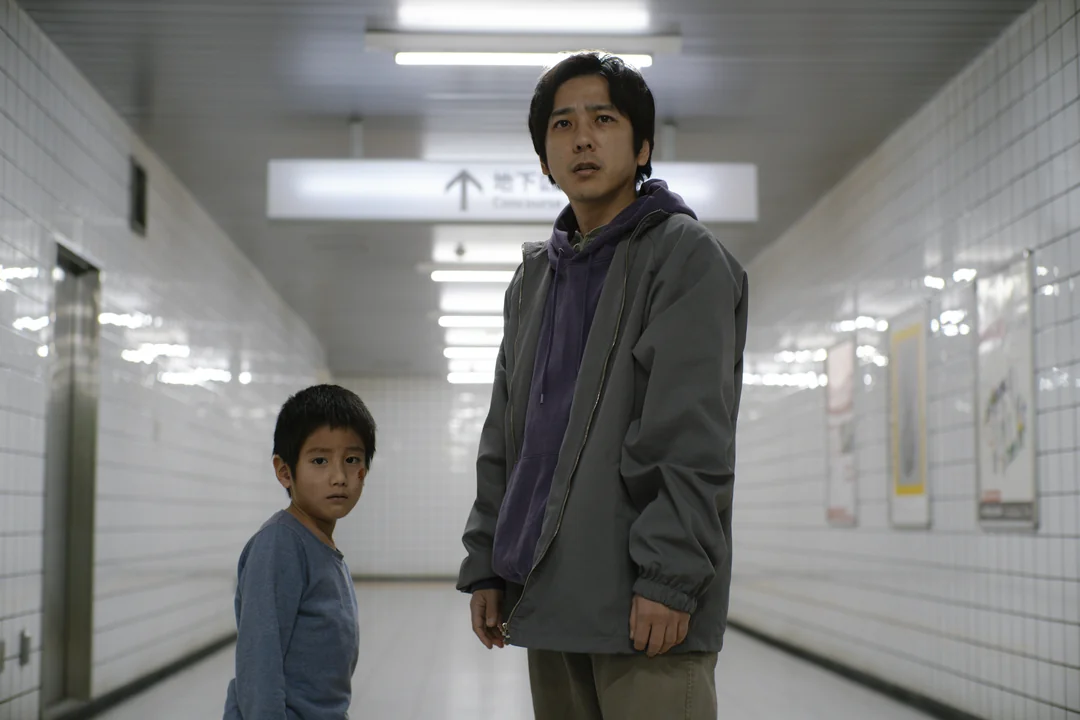
The movie starts with a familiar scene: Protagonist is doomscrolling. He is on the metro, and everyone around him is engaged in the exact same “activity.” Nearby, a little baby cries—perhaps distressed by the frequent radiation or the heavy crowd. Suddenly, a man sitting in front of the baby starts yelling recklessly at the mother. No one reacts, including the protagonist. Choosing not to endure the tension, the protagonist puts his headphones on and answers a call from his ex-girlfriend. The topic of the call is her pregnancy. She tells him that the baby’s fate is up to him—the very same man who just ignored a vital piece of humanity on the metro.
After a brief conversation, interrupted by his incessant coughing from an asthma attack, he enters “Exit Number 8.” The cellular signal vanishes, and he hangs up, still struggling to control his breathing. The empty corridor leading to the exit offers a brief moment of relief, allowing him to process his severe mental shock away from the physical presence of others—except for a single, random “walking man.”
1, 2, 3.
The path seems unusually long to him, but he pays it no mind at first. Raising his head, he wonders: Why do all these people look so much alike? Perhaps he should care…
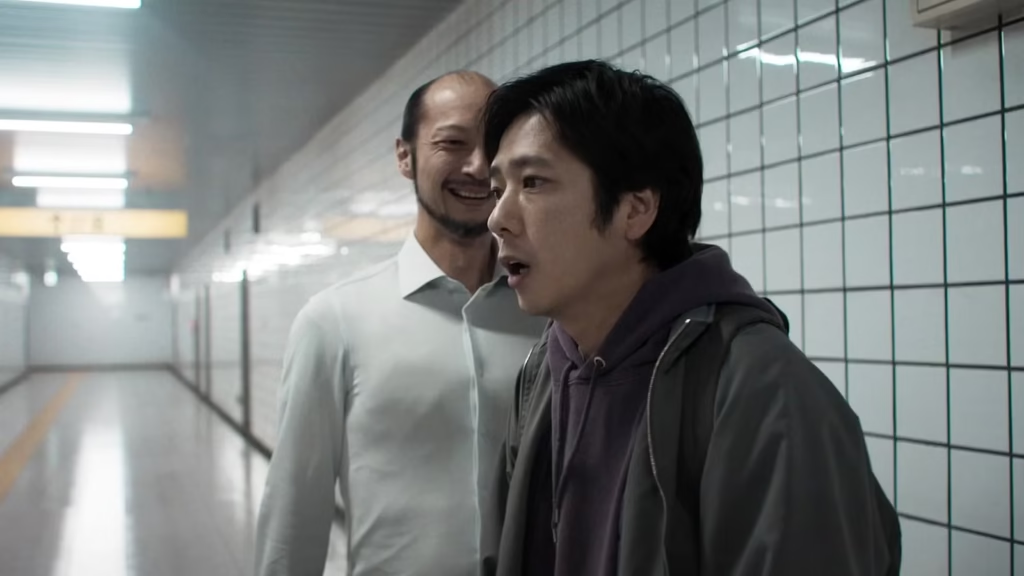
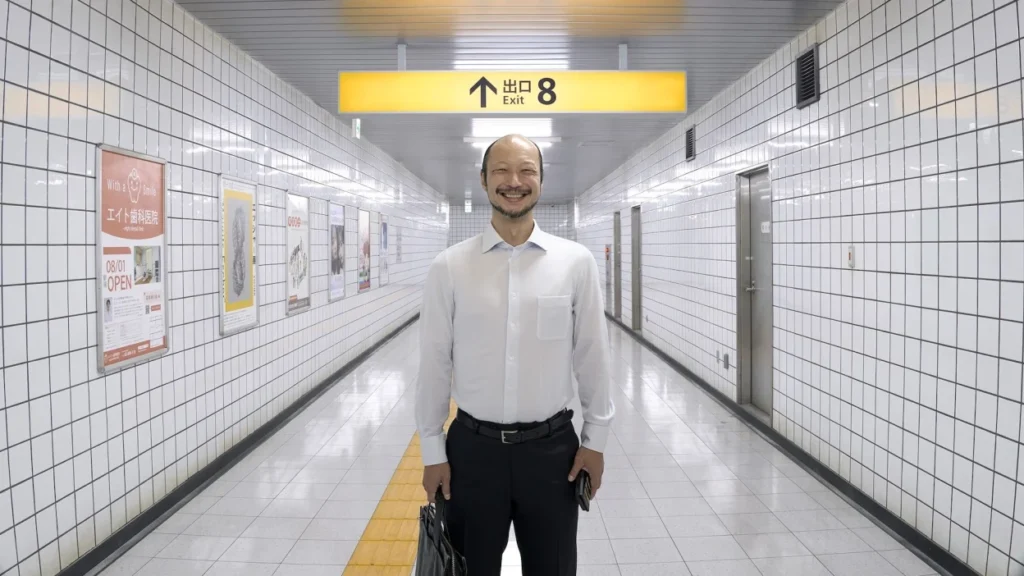
He finally does. And suddenly, that same walking man, whom he has encountered repeatedly across these identical-looking corridors, smiles and stares at him from inches away… ANOMALY!
Assuming the next part of this article is for those who have already watched the film, I hope you enjoy the continuation!
Let’s examine the character names: “The Lost Man,” “The Walking Man,” and “The Boy.” As you can see, the adults in the film are characterized in a specific way. However, they are not portrayed as interesting figures, like those found in adventure films. Although they differ from “The Boy” and possess more life experience, they do not hold a good reputation. A good reputation put on them by people at the same age, if there is any by the way, and most importantly, by creators who tries to mirror the loop we all are in…
On the other hand, “The Boy” is simple. His simplicity does not stem from living a banal, monotonous life like the adults; rather, it is a profound simplicity. He is the one who will show these adults that they are not living as they should, and that they do not adhere to any belief capable of bringing salvation. Grace is far away!
Grace is especially far from The Walking Man, who believed the game had pitied him, the has ignored its rules even on the first level. Firstly, little kid cannot always show him the right way—after all, he is an adult! As he claims, “I did my best for him, it is not up to me anymore,” when The Boy insists on turning back. This is obviously his crime, and his punishment is to walk forever. Just like he always did when he was running late for work, or when he paced just to look good in the eyes of his boss.
In my opinion, pacing the runtime around a pivotal decision— the choice to save the children (interestingly, both “The Boy” and The Lost Man’s unborn baby)—is the most brilliantly structured part of the film by Genki Kawamura, whom I have discovered after this movie.
Furthermore, making “The Boy” actually real being as “game’s rules” shown, but then showing his mother as The Lost Man’s girlfriend; Seperating them near the end; and in ending dragging The Lost Man into the same “scene” in the begining, are all good choices for intriguing theory-based metamodern thriller genre and its fate!
Wishing director Genki Kawamura immense success in his future career, I believe he will do great work for the rise of the independent international cinema industry.
— Furqan
Leave a Reply