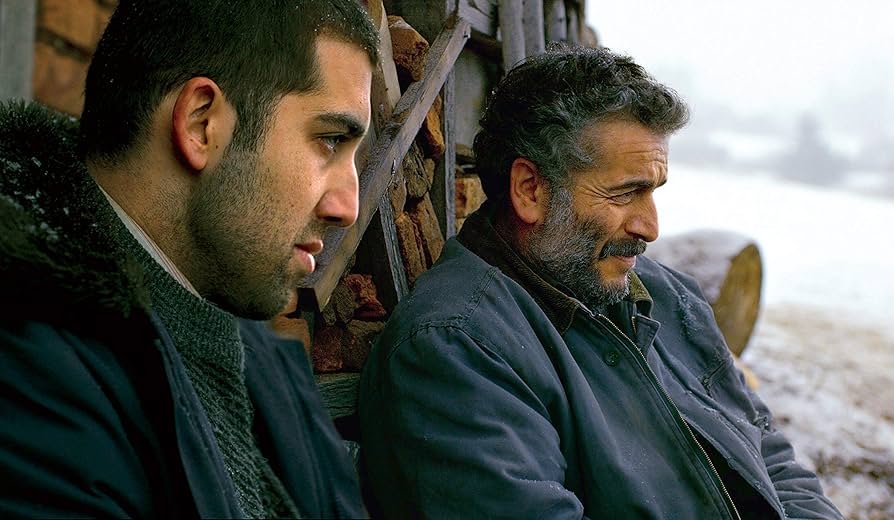
What lies beneath one’s deep potamic nature? Could it be their dreams handing them a sense of will? The hard-won lessons achieved after extreme deeds born of that will? Or simply a declining, constant mass of hope that we call the flow of life? Nuri Bilge Ceylan depicts all of these possibilities through a young actor he discovered named Doğu Demirkol in his film The Wild Pear Tree (2018).
Those who know my writing style are aware that I don’t usually single out the work of a specific actor so heavily. However, Doğu Demirkol—who plays Sinan in the film—is a remarkable guy whose story never fails to astonish me. Briefly, Demirkol participated in a popular Turkish talent show in 2012 as a comedian. Because the audience did not understand his style of comedy and the judges—who aren’t even worth listing—began belittling him for higher show ratings, Doğu left the stage that night mocked and teased by the entire country. Yet, while everyone (including himself) wrote him off as a prideful fool, Nuri Bilge Ceylan contacted him out of the blue. And 2,300 refined cinephiles gave a 15-minute standing ovation at the Cannes Film Festival in 2018 to the movie he starred in as the protagonist.
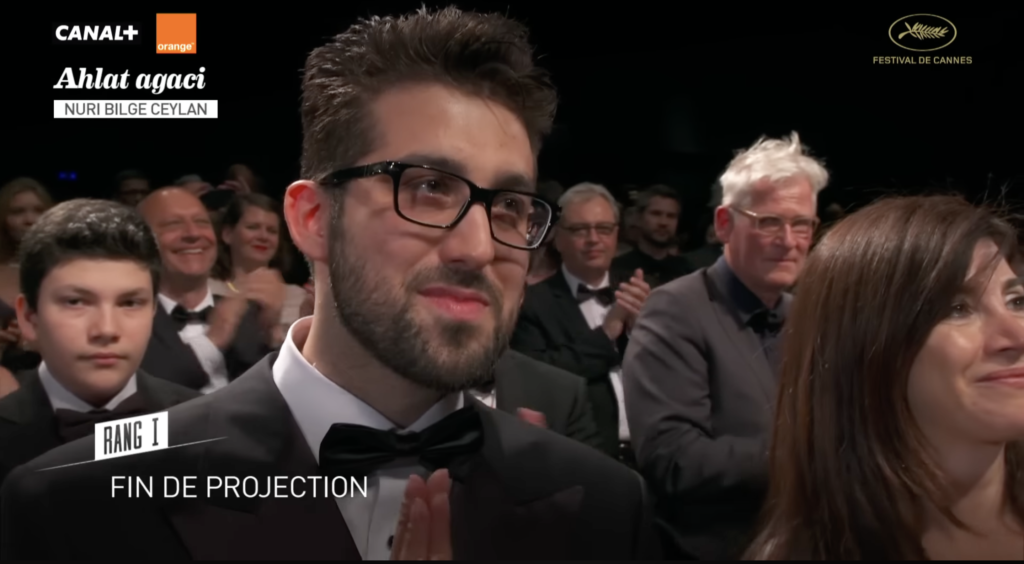
Ceylan’s choice of Doğu for such a role was hardly random. Seeing how Doğu refused to yield to the crowd’s boos on stage, Ceylan understood that his portrayal of the “Wild Pear Tree”—a tree without uniqueness that appears rugged and unrefined—could be no one else but him. Considering how strikingly similar Sinan and Doğu are, I want to dive into the film itself through its protagonist.
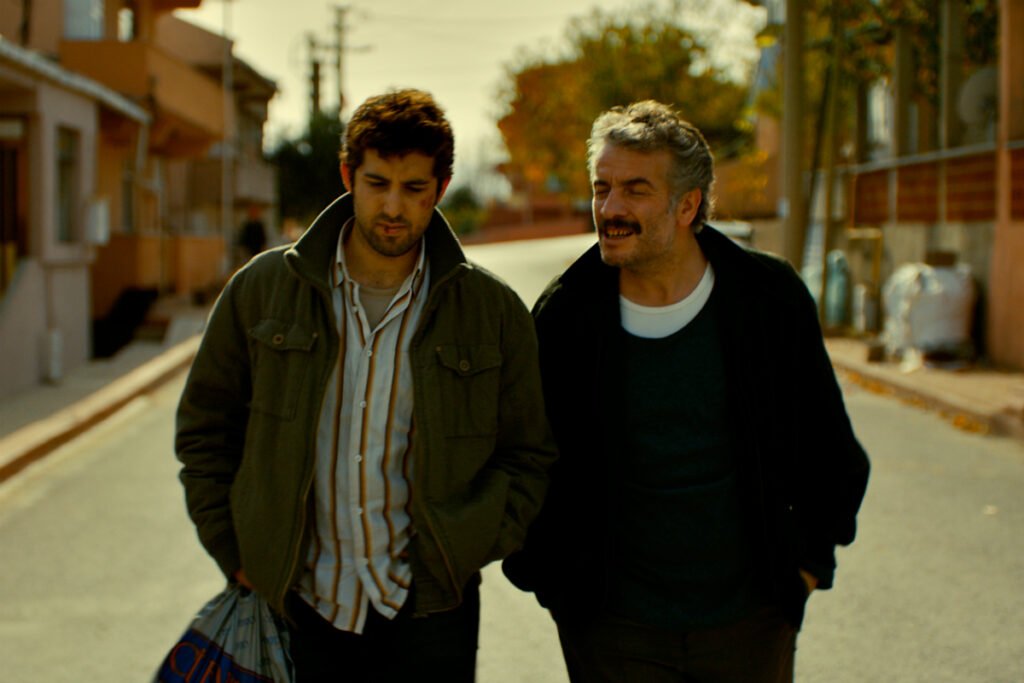
The film begins with Sinan, a young man with literary aspirations, returning to his home village and immediately making efforts to scrape together money to publish his book. Another crucial persona in the film is İdris—Sinan’s father—who is addicted to sports betting despite his intellectual personality. The story builds a bizarre feeling that İdris is going to explode at any moment, and consequence of this bizarre feeling gives you one of the finenst 3 hour experience….
Assuming the next part of this article is for those who have already watched the movie, enjoy reading on!
First of all, I would like to highlight one fundamental emotion that plays a prominent role in capturing the audience throughout the story’s rising tension: An anger that many of us can deeply empathize with. We watch a great deal of anger and accelerating hatred build as time goes on and the protagonist’s burden grows. The indifference between Sinan’s desperate wish to publish his dream book and anyone else’s unrelated actions makes him furious. The subtle genius of Ceylan’s style in his 3 recent films hits the mark once again… Let me break it down simply.
(These are my subjective thoughts, so feel free to share your own views or suggestions in the comments!)
The core of this miracle-like style consists of several key elements:
- Long runtimes against the modern era’s low attention span: If you check out the Cannes premieres of Ceylan’s films, you can hear him repeating, “I know this is a long film; it is difficult to watch long films nowadays… anymore.” Although it might sound simple, he is powerfully taking a stand against the distracting nature of modern life. The way he executes this fascinates the audience, drawing them in until they feel like a part of the storyline. For example, in the scene where Sinan tells his mother, “I loathe people,” you find yourself muttering or feeling those exact words profoundly, no matter how much you love humanity.
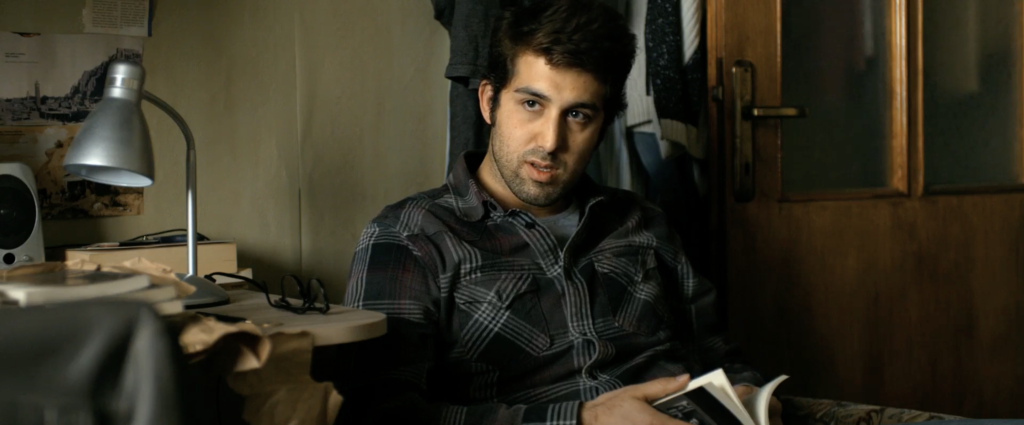
- A mysterious problem that presents a dilemma: In the middle of the film, a scene poses an unanswered question: Who stole Sinan’s 300 TL? Similarly, in Ceylan’s other masterpiece, About Dry Grasses, we are left wondering what the girl student actually wrote in the letter that sparked the film’s main incident.
- Long debates, conversations, and tirades: From the philosophical arguments of Winter Sleep, to the native dialect and discourse of The Wild Pear Tree, to the intellectual tirades of About Dry Grasses—Ceylan breathes fresh life into arthouse cinema. Viewers like me, who love the breadth of rich dialogue, will always adore his work. I’ll never forget a sentence my biology teacher (whom I rarely listened to) always repeated in class: “Humans are social creatures.”
Finally, I want to mention my favorite detail of the film: its seemingly “weak” editing. This “weakness” is visible at several points, starting vividly from Sinan’s meeting with Süleyman the writer. Even someone with no understanding in cinema can spot continuity errors between cuts, such as a shift in location by 100 to 200 meters in the middle of a single word. We see similar transitions during the scenes after İbrahim’s silencing monologue, as well as when Sinan breaks a statue and hides inside the Trojan Horse.
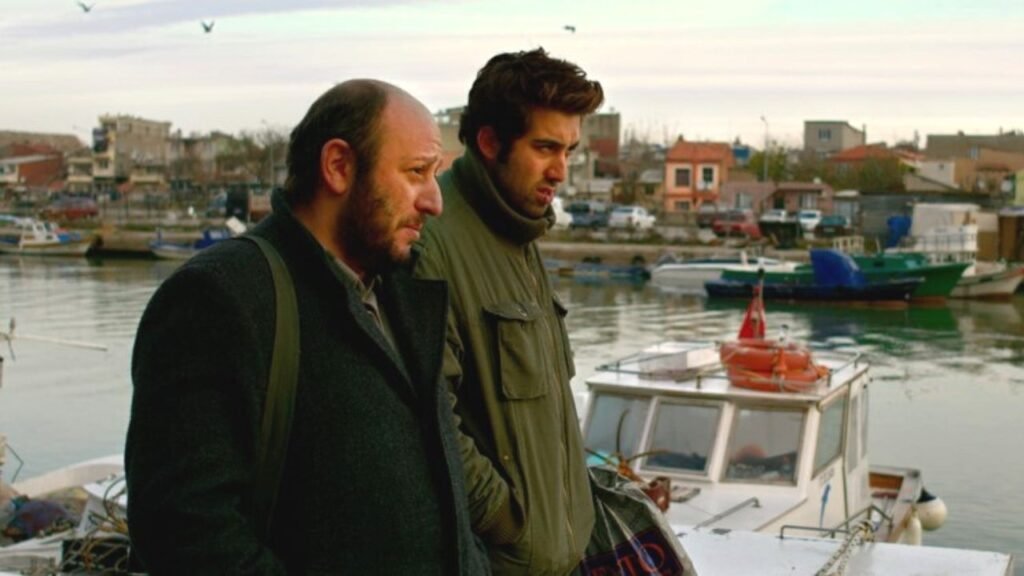
But guess what happens right after those moments? Sinan wakes up from a dream! What a stroke of genius!
Similar jump-cut errors occur during Sinan’s conversations with the village imams. But this isn’t a flaw either. As they debate various topics, their discussions gradually turn into a battle of pure winning instincts. They keep talking simply because neither wants to walk away looking like they lacked an answer. And as we all know, in real life, you completely lose track of time during such heated debates—just like the scenes that skip so inconsistently throughout the film.
This surreal perspective on a young character’s life—and Doğu Demirkol’s role in it—means so much to me personally. Everyone who works with Nuri Bilge Ceylan says he is an absolute idealist who pushes actors to their limits. Perhaps he is. Yet, coming back to watch his recent films a second time, I can truly see how justified his pursuit of perfection was—and will always be—with all those meaningful, delicately crafted words, scenes, and characters.
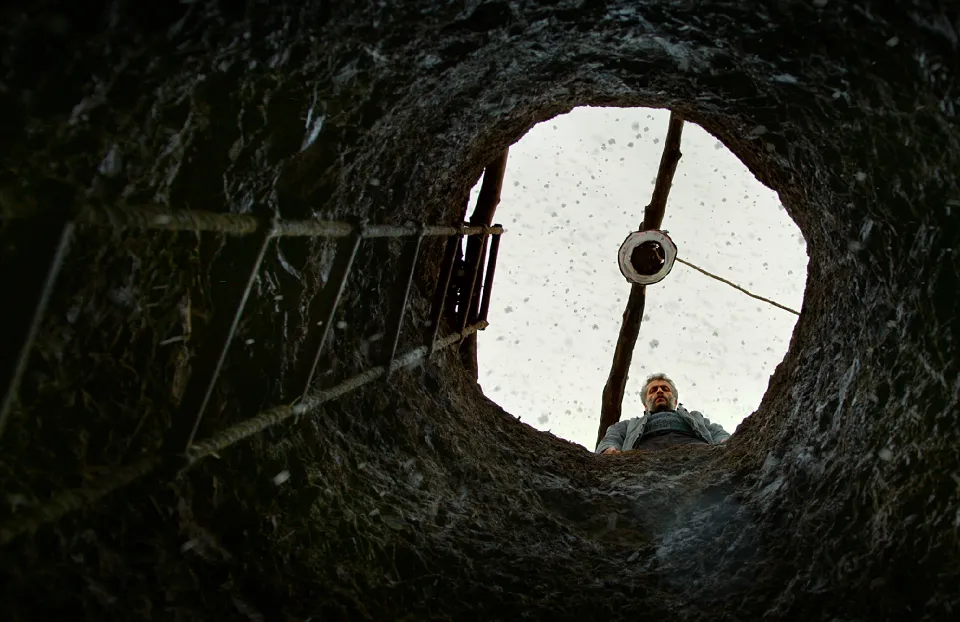
Once more: to Nuri Bilge Ceylan, who has always loved his lonely and beautiful country…
— Furqan

Leave a Reply