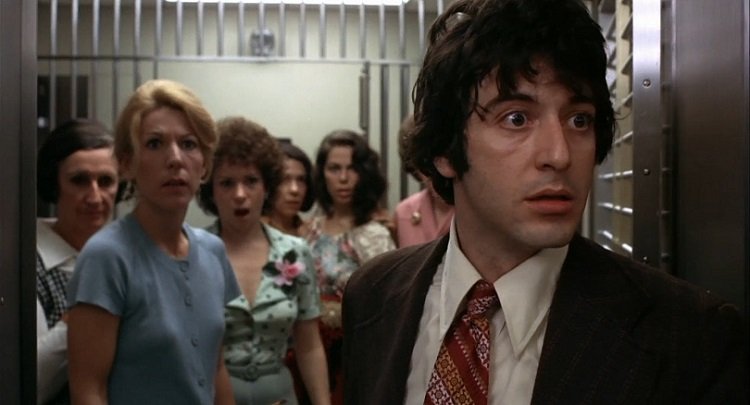
Sometimes, simple problems spark the biggest incidents that we cannot get over even after a long time with a great deal of shock. Other times, the most tragic events get the simplest reactions, leaving us in a state of silent, ethical astonishment. Both scenarios have such tremendously devastating effects on us that we can barely differentiate between them. After a deep exchange of ideas, the word “manipulation” seems to be the core of this enigma to me. Dog Day Afternoon is a film that penetrates these exact feelings throughout its 125-minute runtime. Let’s look at the rationale behind it to be this meaningful.
The movie begins with the arrival of the protagonists, Sonny and Sal, to rob a bank. Deviating from cliché bank-robbing scenarios, this story features two nervous men operating entirely without a plan. Sonny, the boss of his “extensive” robbing crew, pretends to be a clever controller of the situation they face, but Sal understands just how spontaneous and dangerous their reality actually is. Soon enough, Sal’s apprehensions come true: hundreds of police officers suddenly surround the building out of the blue. From this moment on, the ping-pong match begins… or to be exact, the swift shift in the agenda.
First of all, of course, everyone, including Sonny, Sal, the eight hostages, police officers, and we, the audience, can predict that the bank robbers will ultimately be caught and punished for what they have done. They definitely will. However, the main philosophical paradox that I have mentioned in the beginning starts at this point. Somehow human beings start to feel hopeful through even a small glimpse, or make themselves believe that the ending cannot be this much close; And ultimately, they start to make different solutions; Perhaps the routes to escape sound absurd, but a current in human belief always takes its “host”.
This is precisely what happens in Sonny’s mind. In that frantic hurry, where he must find the impossible remedy for escape, he remembers a recent public injustice: the Attica prison riot. His mind, perhaps entirely on its own, makes a moral connection to this protest and adapts it to his own situation. When Sonny steps outside to negotiate with Police Detective Sergeant Eugene Moretti—a metaphorical figure representing systemic authority—he shouts, “Attica! Attica!” over and over, thirteen times, to force the civilian crowd to empathize with him. And guess what? It works. The true nature of manipulation is set in motion.
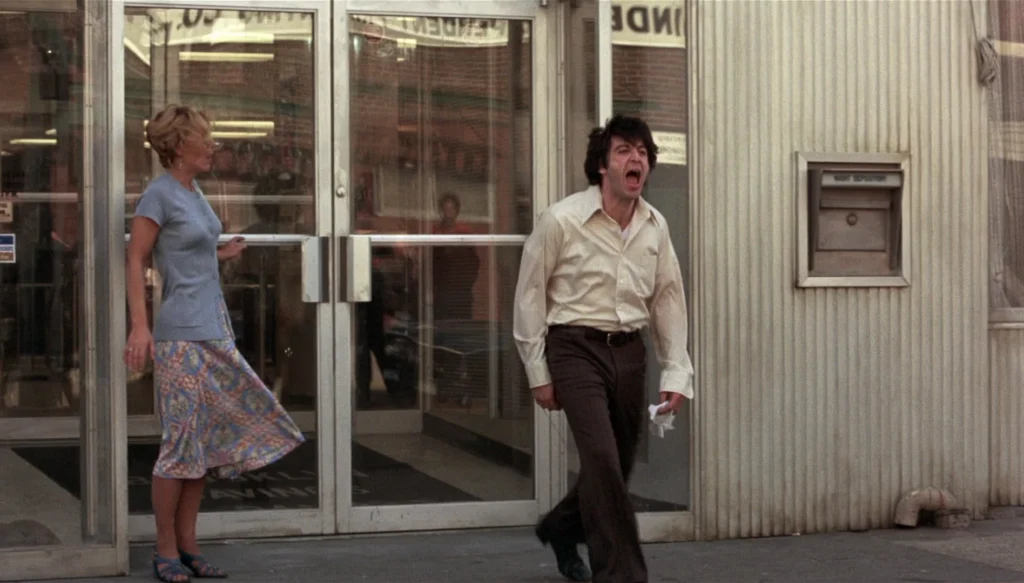
Upon returning to the bank, Sylvia, one of the hostages who went outside with Sonny, refuses to be rescued; she refuses to be freed. As a working-class person in the system, Sylvia sees that her captor is closer to her than the police officers and detectives promising her freedom. This is where the nuance of Stockholm syndrome becomes clear. While being a hostage, she shares a desire for freedom with an activist. It is true, that activist maybe took her as a prisoner, but anyway, she had been imprisoned for many years in her job. What is the difference, really?
We can clearly see Sylvia’s perspective reflected in the other hostages as well. For instance, when they learn that Sonny has a male partner in addition to his legal wife and two children, the sympathy on their faces is palpable. This collective alignment continues when Sonny negotiates with the FBI too. The hostages witness him setting stipulations with the genuine belief that everything will turn out fine, and they partially start to believe it too.
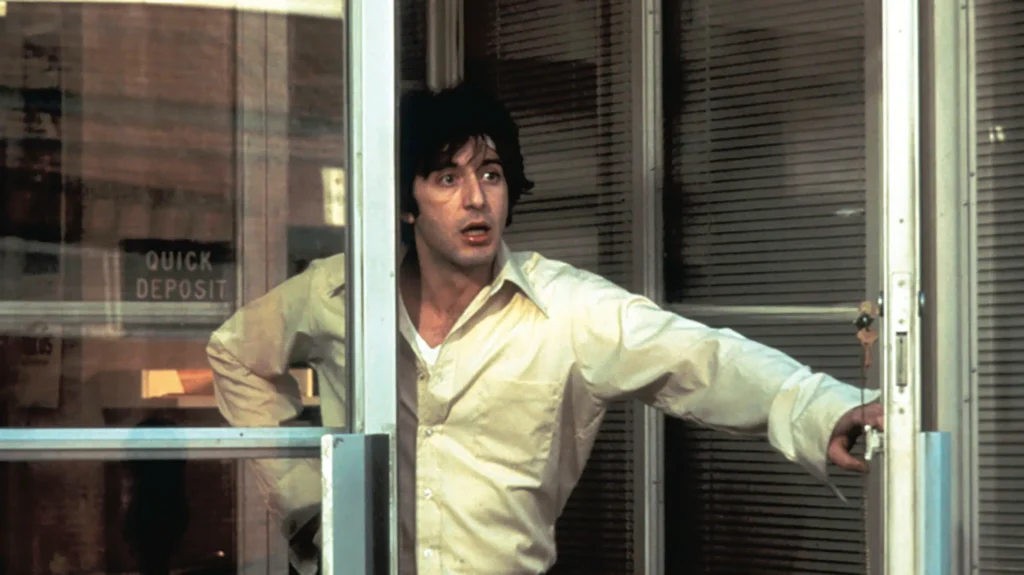
My favorite aspect of this movie is that I cannot tell the creators, screenwriters made these characters to indicate this or that. Because the true creator of these characters is life and society itself. Sonny’s parallel life choices—having a wife and children alongside a male partner—are entirely real, a product of the unpredictable stream of life that sweeps us up in both its catastrophes and its beauties. If you look at discussions about Dog Day Afternoon, many people find it hard to believe these events are true. But they are. John Wojtowicz, the real-life inspiration for Sonny, actually did all of this. He had a wife and kids, he married a man, he truly believed the FBI would let him fly to another country in a private jet, and above all, he genuinely believed his dreams could come true.
Of course, leaving Al Pacino out of this piece would be a genuine sin. It might sound radical, but claiming this isn’t his greatest performance would be a slight sin as well. Personally, I have never seen an actor whose lips tremble this much realistically during an argument despite a brave exterior. I have never seen a man’s eyes convey such deep, desperate ambiguity.

Epilogue for Real Experimentalists… Or Not… Who Knows?
Human consciousness has tried to define itself since the dawn of its theoretical existence. However, it has yet to find a proper answer. So far, most people settle for the word “complex” as a catch-all. But if you are looking for a logical answer to the question “What is a human?”, consider these:
–“Y’know…” (Yes, literally just “y’know.”)
Or…
–“Stupid procrastination in everything, everywhere, all at once.”
Or…
–“Attica! Attica! Attica! Attica! Attica! Attica! Attica! Attica! Attica! Attica! Attica! Attica! Attica!”
— Furqan
Leave a Reply