Cain and Abel… The first ones in history. If you ask a postmodernist about them, they will label their tale as history’s very first cliché. If you ask a conservative, they will instantly start lecturing you about it (as if they alone are knowledgeable on the subject). However, there is one perspective that neither side seems to notice: how none of us can fully capture the raw simplicity of those two brothers’ dynamic and its reflection on the present day. Let’s refocus on the drive behind their story. Didn’t it all stem from Cain’s sudden jealousy and rage in the blink of an eye? It certainly did! Today, we are going to analyze a similarly straightforward narrative—one that may seem unthinkable, yet is actively taking place right under our noses: Ladies and gentlemen, here is Salvation by Emin Alper.
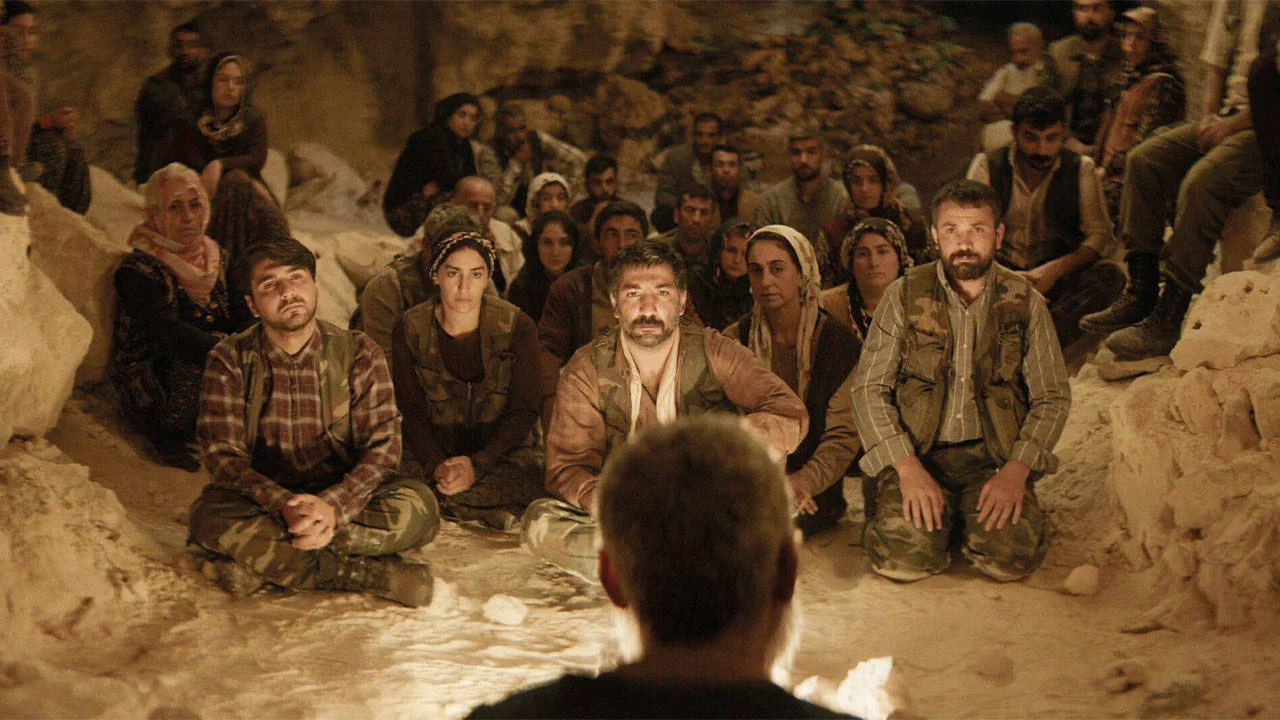
The film opens with shots of a Kurdish village, home to a community called the Hazerans. After a few moments, we learn that the Hazerans have been armed by the state for years against emerging terrorism in Turkey. Through this, they have gained wealth by occupying the left behind lower parts of the village, which were historically inhabited by another community, the Bezaris. However, as terrorism has faded, the Bezaris—who had previously fled to the cities when the conflict began—have decided to return to their own lands. As you might predict, this sudden shift is viewed as an insult by nearly every Hazeran, except for Ferit, the village’s current sheikh. Ferit seeks to take a merciful stance despite old grievances with the Bezaris. Yet, fueled by the lingering weight of past incidents and a groundswell of present-day hostility, the story spirals toward its “salvation” under the leadership of Mesut—Ferit’s brother and the Hazerans’ new sheikh.
Assuming the next part of this article will be for those who have watched the movie, enjoy reading on!
To start with its main strengths, let’s emphasize Emin Alper’s use of surrealism within his arthouse style. Utilizing surrealism through dream sequences in starkly realistic arthouse cinema is a common and widely consumed trope. However, leading the audience to believe, “If I witness something paranormal, it must be a dream,” and then throwing them directly into real-world enigmas takes a level of courage that very few writer-directors possess. I can assure you that Emin Alper executes this almost flawlessly throughout the film. Scenes that seem ripped straight out of a horror movie begin by Mesut’s creepy nightmares, yet over time, they start to bleed into shared reality—such as the scene where both Yılmaz and Mesut witness Yılmaz’s son, Furkan, strangely chanting.
Then, there is the director’s subtle handling of the characters. After declaring Mesut their sheikh, all the Hazerans claim to experience the exact same dreams simultaneously. Yet, we are never shown these dreams in parallel. By withholding a visual representation, the film instills a sense of skepticism regarding a group of people who are supposed to share identical beliefs; we can never truly be sure if they are genuinely hypnotized by the same visions.
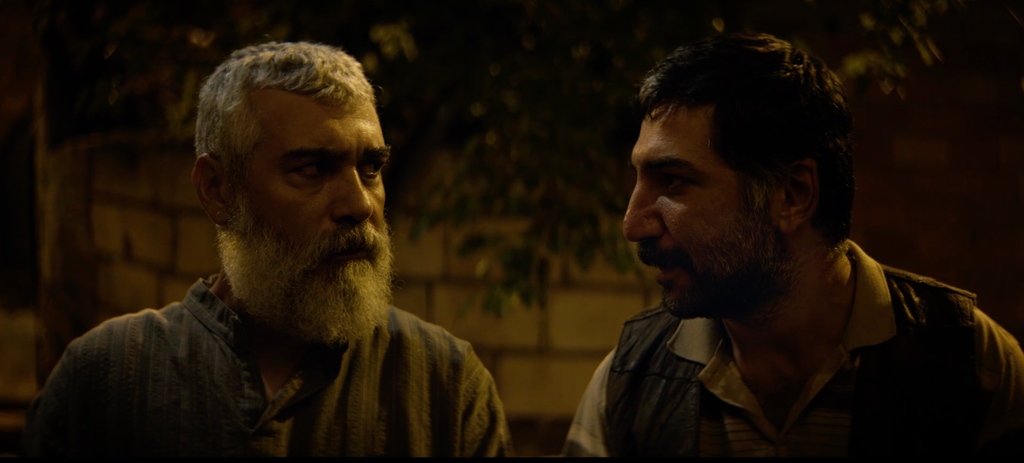
Even Mesut—the leader at the center of this unity—is never actually depicted seeing his grandfather, despite claiming he does. Bearing in mind that Mesut lacks the natural fortitude to find strength within himself, a question arises: What is the force actually driving him? Emin Alper’s script lays this bare. To understand it, we must revisit the “lingering weight of past incidents”: Years ago, despite heavy opposition, Mesut married a woman who worked as a housemaid for a Bezari family. Because of this act, his sheikh grandfather chose his brother, Ferit, as the rightful heir instead of Mesut, leaving Ferit to speak to him from a position of authority. Conversely, those in lower positions who hungered for the Bezaris’ land—such as Fatma and Yılmaz—began approaching Mesut from a friendlier, more validating angle. This means rather than having a simple tip of an ice and darker unseen deep parts, Yılmaz was showing off his majestic grandfather as the tip of an ice and concealing minor figures in the unseen parts.
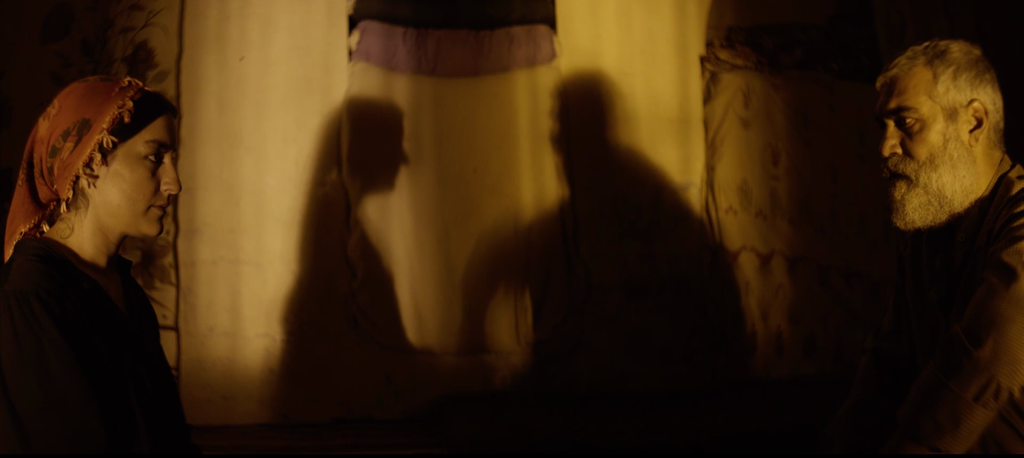
The toxicity of these characters’ relationships is a vast topic in itself, with roots that touch on intimacy within large societies and trust in inherited hierarchies. In this article, by not writing paragraphs regarding these themes, I will simply connect them to Emin Alper’s unpretentious approach to political cinema.
Describing his political commentary as “unpretentious” highlights a fortunate and successfully executed distinction that many modern political films fail to achieve. To some extent, another Turkish film, Yellow Letters (2026)—which won the Golden Bear in Berlin Film Festival—serves as an example of a film that leans a bit into that pretentious category. Although I gave both films the same overall rating, from my point of view, works like Salvation play a far more vital role in the landscape of political cinema.

Finally, I would like to offer a brief personal observation regarding why Salvation may have lost the Golden Bear despite its compelling storytelling. In my view, the issue lay in the film’s noticeable scene transition errors. While that might sound like a minor critique, it noticeably disrupted the narrative tension following otherwise breathtaking scenes. Perhaps these pacing choices were intentional, but they ultimately hindered the film from reaching an even higher standing. Still, these are merely my subjective opinions.
As my first introduction to his filmography, Salvation proved to me that Emin Alper is a director who will remain a central gem in the advancement of Turkish cinema. I wish him the very best of luck in his future career…

Sincerely yours,
—Furqan

Leave a Reply